JavaScript for Pythonistas
You already know how to program. These courses teach JavaScript through the Python you know, so you spend your time on the parts that actually differ. You’ll map lists to arrays, dicts to objects and Map, comprehensions to array methods, and with to try/finally. Along the way you’ll see where the two languages part ways: equality and type coercion, this, prototypes, and async code that relies on the event loop from the very first fetch().
Free Bonus: JavaScript Cheat Sheet

Variables, arrays, objects, functions, and async basics in one printable reference.
Get the Free Cheat Sheet »Knowing where the differences are is what lets you read JavaScript with confidence, including the JavaScript an AI assistant writes for you. Follow the JavaScript for Beginner Pythonistas learning path from your first script to modules and errors, then go deeper into async code, classes, and the object model.
No. Most programming ideas carry over directly: variables, functions, loops, objects, and modules. What takes practice are the details that look familiar but behave differently, such as == versus ===, how this is bound, and how undefined and null differ from None.
JavaScript runs on an event loop and leans on asynchronous code from the start, especially in the browser. It also converts types more freely than Python, so comparisons and arithmetic can surprise you until you know the rules.
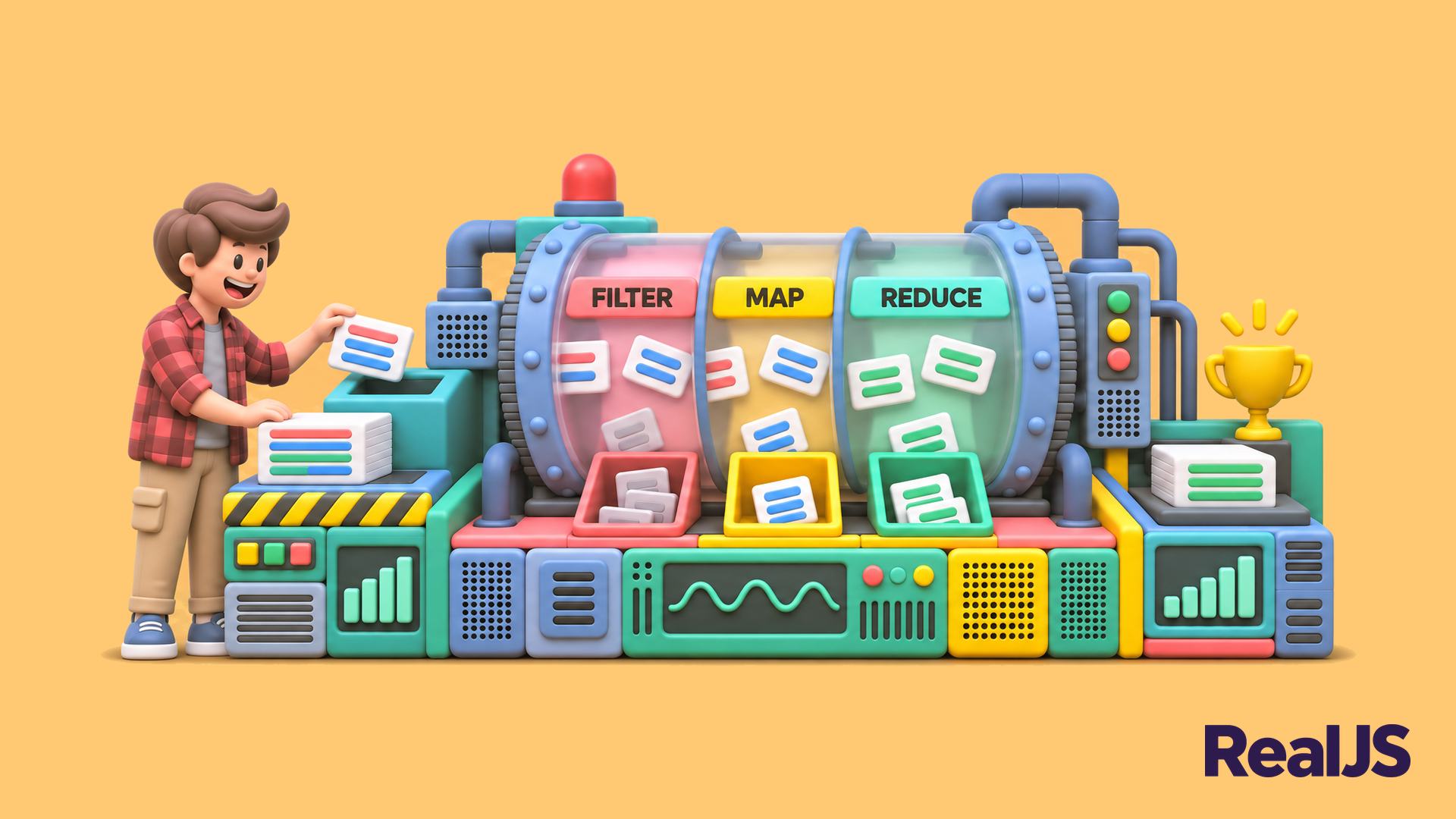
No. Use array methods instead: map() transforms each item, filter() keeps the ones you want, and reduce() combines them into one value. You can chain them to get the same effect as a comprehension.
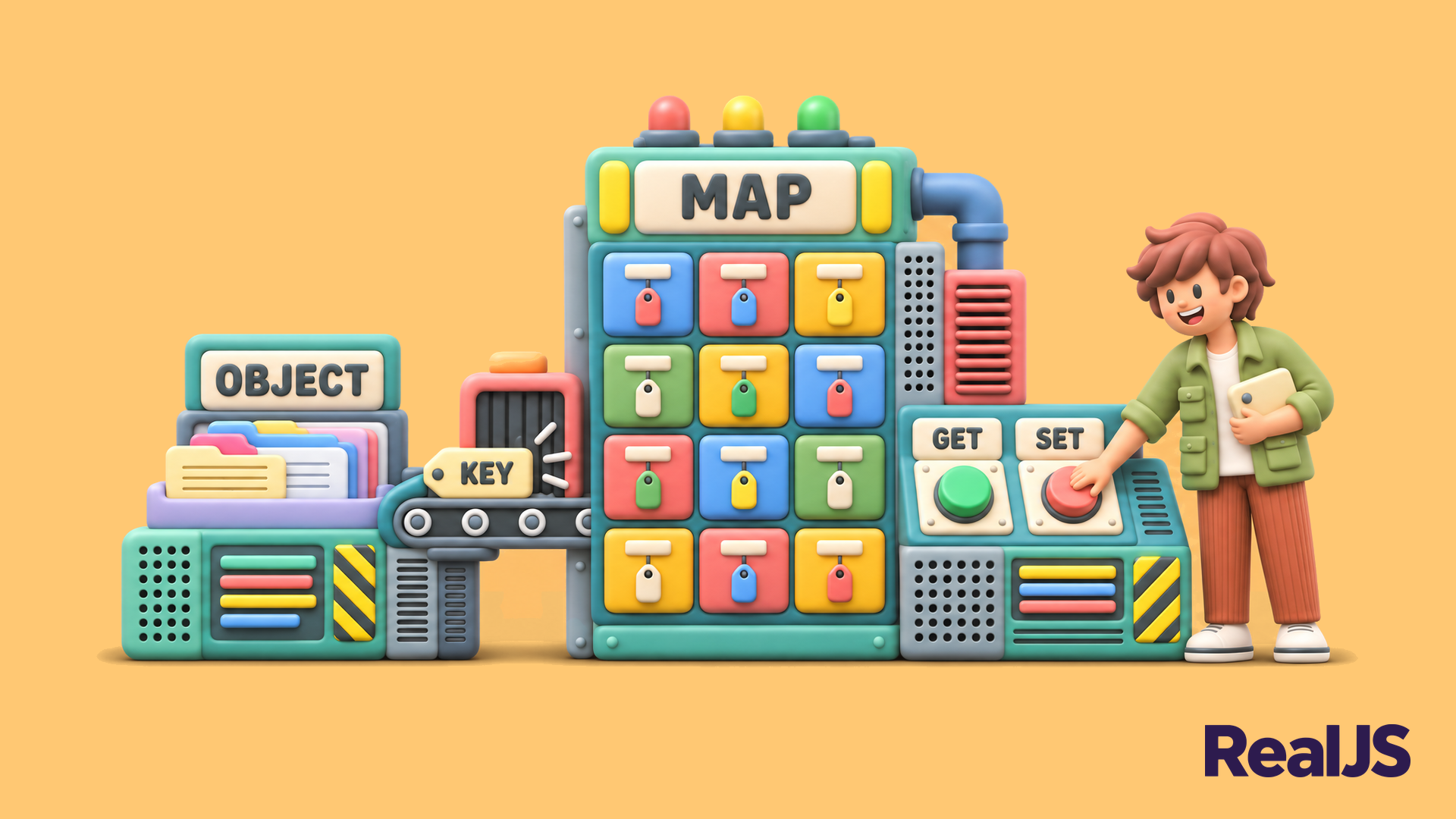
Use a plain object for records with known keys, and a Map when keys are dynamic or aren’t strings. A Map also remembers insertion order and has a size property, which makes it the closer match to a dict.
Not to start. Every browser runs JavaScript, so the console is enough for small experiments. To run scripts from the terminal, as you do with python, install Node and use the node command.