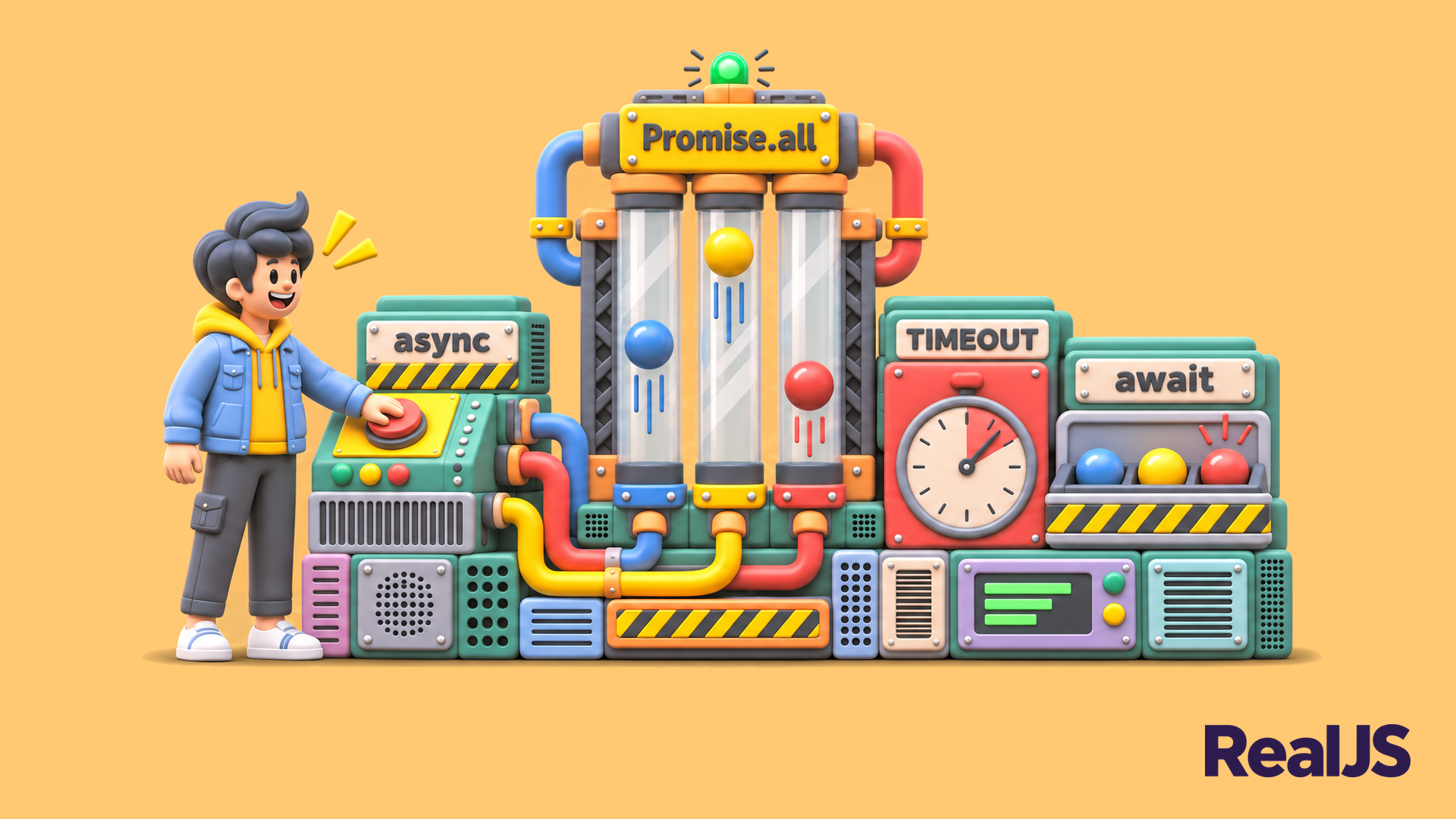

JavaScript’s async and await look so much like Python’s that a line-by-line port of asyncio code looks right. Port asyncio.gather(*(check_kiosk(b) for b in KIOSKS)), turn Python’s star into JavaScript’s spread, and Promise.all(...BRANCHES.map(checkKiosk)) stops with TypeError: object is not iterable before a single kiosk answers.
In this course, you’ll port a library’s morning holds check, which asks every branch’s kiosk at once, gives up on slow ones, and asks a failing kiosk again, with a function standing in for the kiosks so every example runs offline.
By the end of this course, you’ll be able to:
- Port
async defandawaitwithoutasyncio.run(), and read the promise an async call returns - Await work in turn with
for...of, or all at once withPromise.all() - Keep every outcome, failures included, with
Promise.allSettled() - Give up on slow work with
Promise.race(), and retry withtry/catcharoundawait - Handle a promise you await later
- Port the whole holds check to JavaScript
You’ll need Python asyncio with async def, await, asyncio.run(), gather(), sleep(), and wait_for(), plus Node 26 and JavaScript functions, arrow functions, array methods, modules, try/catch, and reading files with await readFile(). The Python examples use Python 3.15.
The course mixes short videos and text lessons with exercises, a project that ports the whole holds check, and a quiz.
What’s Included:
- 16 Lessons
- Video Subtitles and Full Transcripts
- Translated Subtitles in 8 Languages
- 2 Downloadable Resources
- Interactive Quiz to Check Your Progress
- 4 Hands-On Coding Exercises
- Q&A With JavaScript Experts: Ask a Question
- Certificate of Completion

Downloadable Resources:
Related Learning Paths:
