JavaScript for Intermediate Pythonistas
Learning Path ⋅ Skills: JavaScript Types, Collections, Scope, Classes, Testing, Async, Modules

This path is for Python programmers with intermediate experience who want to learn JavaScript as a career skill. You’ll start with fast-track versions of the foundation courses, then go deeper into types and equality, numbers, text and regular expressions, collections, scope and closures, classes, errors, testing, dates, and asynchronous code.
Every course starts from the Python you already know and spends its time on what’s different in JavaScript. You’ll practice with exercises and a quiz in each course, and with small projects along the way. If you’ve already completed the Beginner path, you can skip the fast-track versions of courses you’ve already taken.
JavaScript for Intermediate Pythonistas
Learning Path ⋅ 29 Resources
Is this path right for you? Mentor AI knows what’s in it and can help you decide where to begin.
Ask Mentor AI

Set Up JavaScript and Learn Its Shape
Start with fast-track courses that get JavaScript running on your computer, take you on a quick tour of the language from a Python point of view, and cover the syntax rules that differ from Python’s.
Course
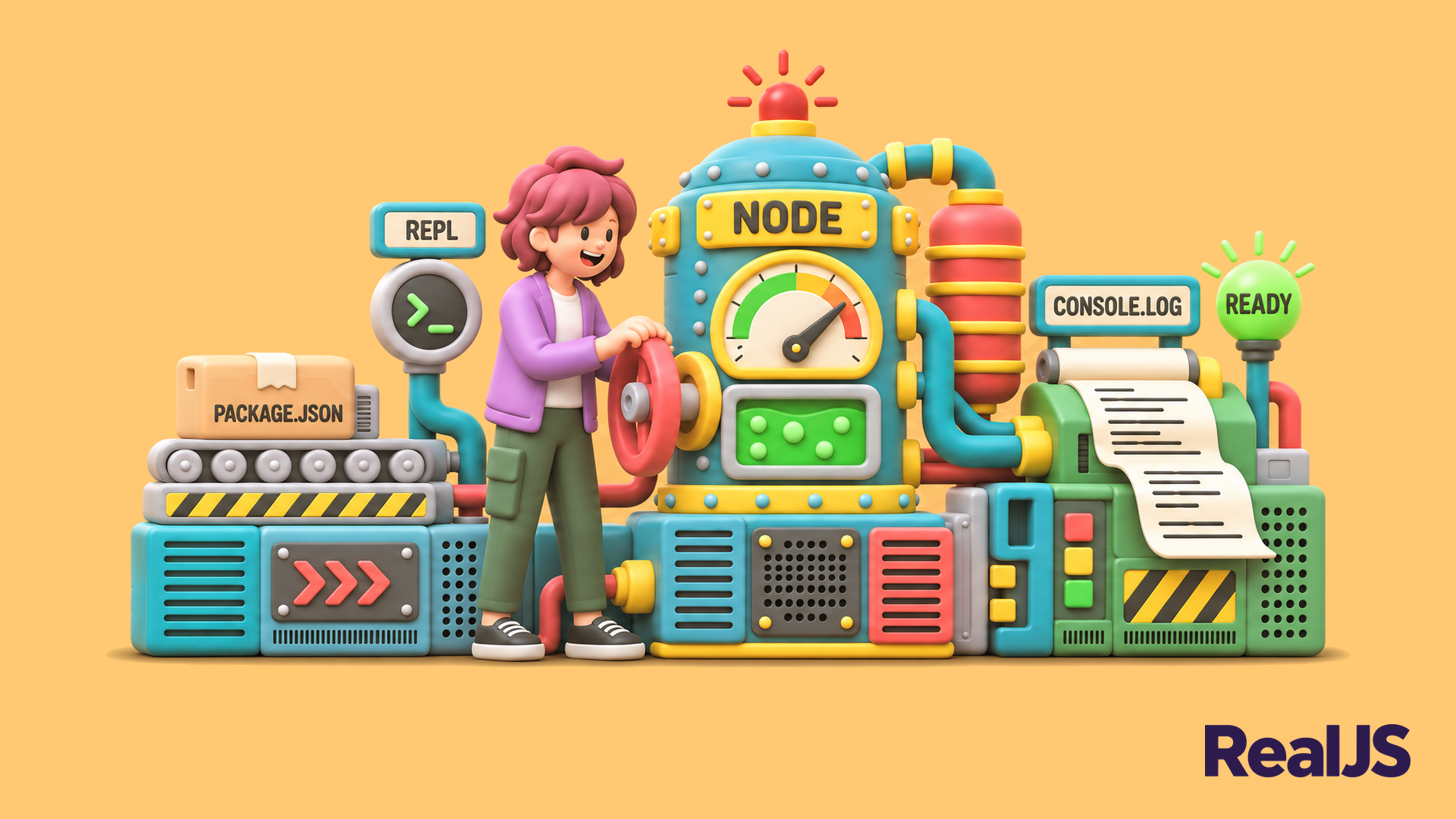
Getting Started With JavaScript for Pythonistas (Fast Track)
Install Node and port a Python setup-check script to JavaScript in this faster version, and learn to run scripts, set up a project, and read JavaScript's errors.
Course
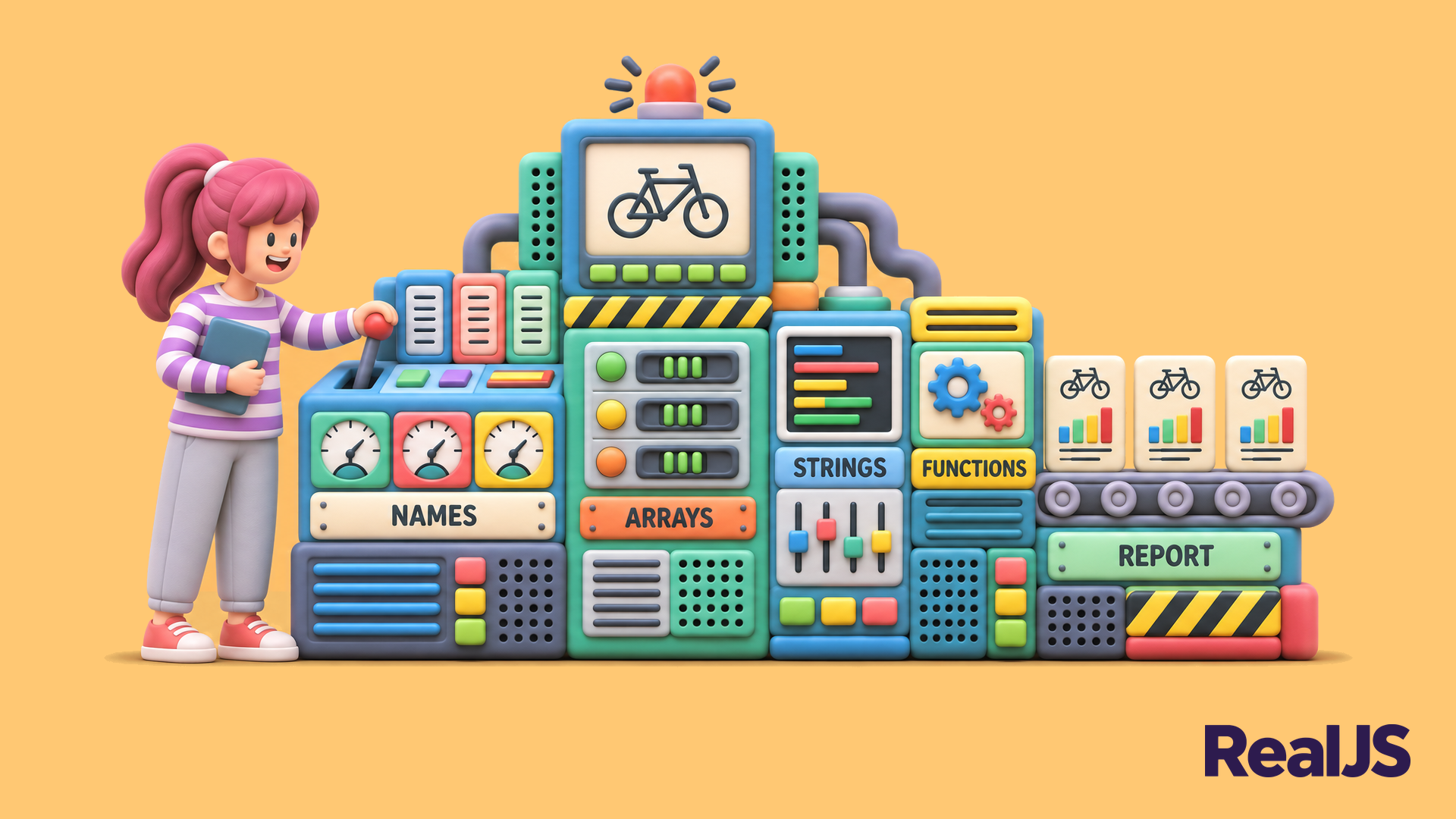
A First Tour of JavaScript for Pythonistas (Fast Track)
Get a quick first look at JavaScript by porting a small Python report, skipping what matches Python and focusing on what JavaScript does differently with names, strings, decisions, loops, functions, arrays, and objects.
Course
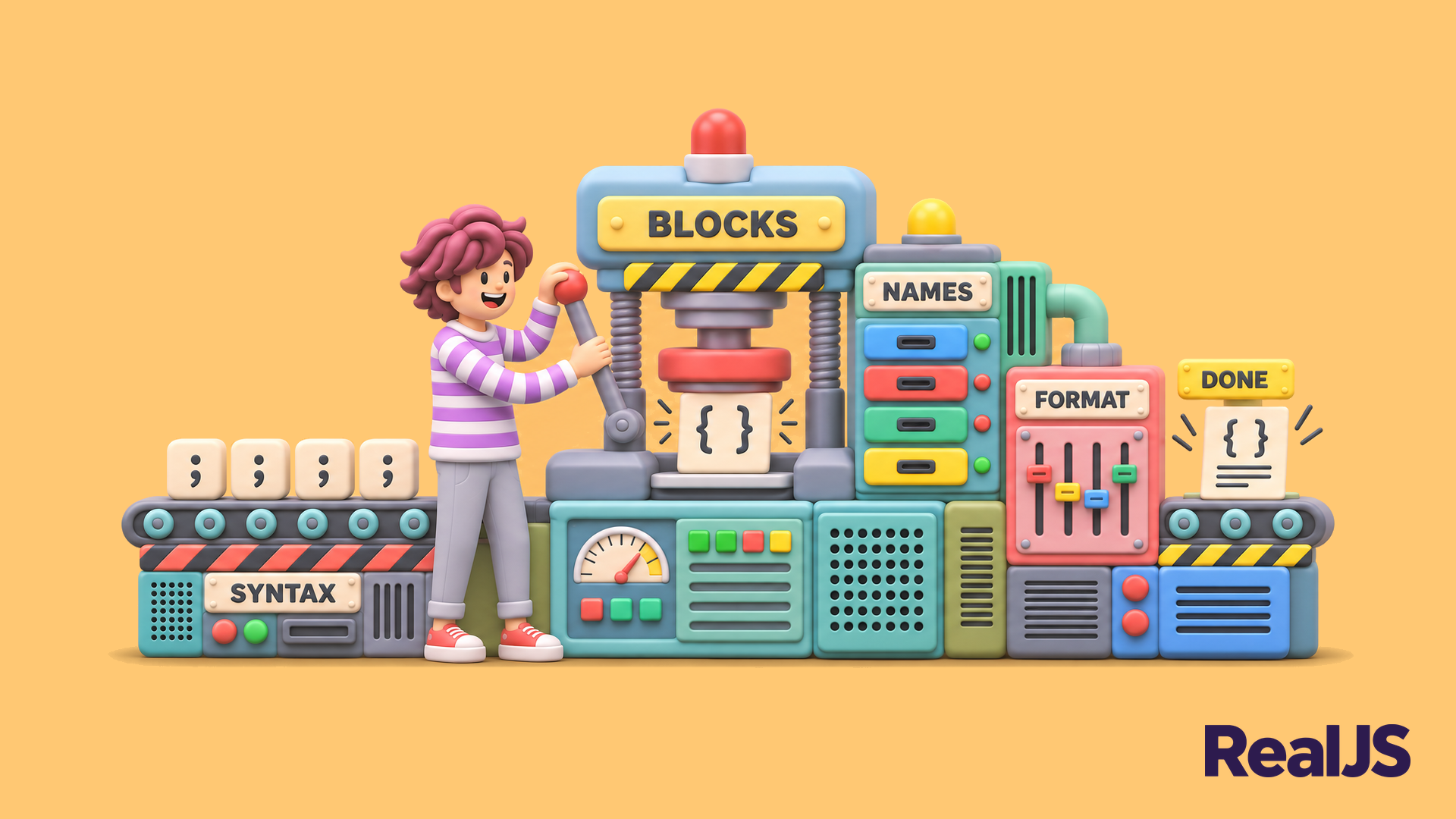
JavaScript Syntax for Pythonistas (Fast Track)
Port a web agency's release-note script from Python to JavaScript in this shorter course, and learn how JavaScript's blocks, statements, line breaks, and names differ from Python's.
Pin Down Types and Equality
Next, you’ll see how JavaScript’s variables and types compare with Python’s, then go deeper into equality, type checks, and the conversions that surprise Python programmers.
Course
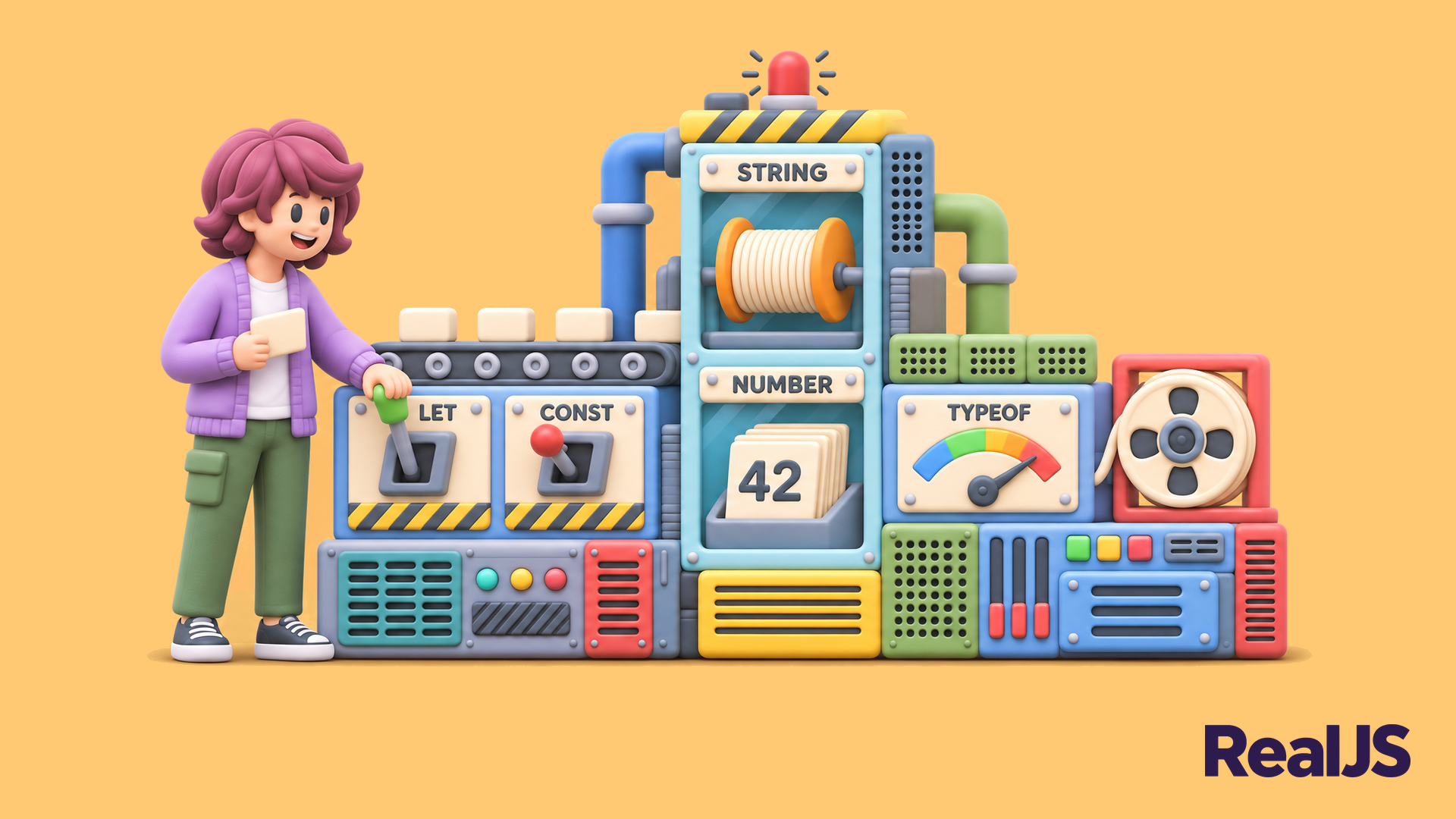
JavaScript Variables and Types for Pythonistas (Fast Track)
The shorter version for experienced Pythonistas: port a Python backup check to JavaScript, and learn const, let, typeof, null and undefined, empty values, and ===.
Course
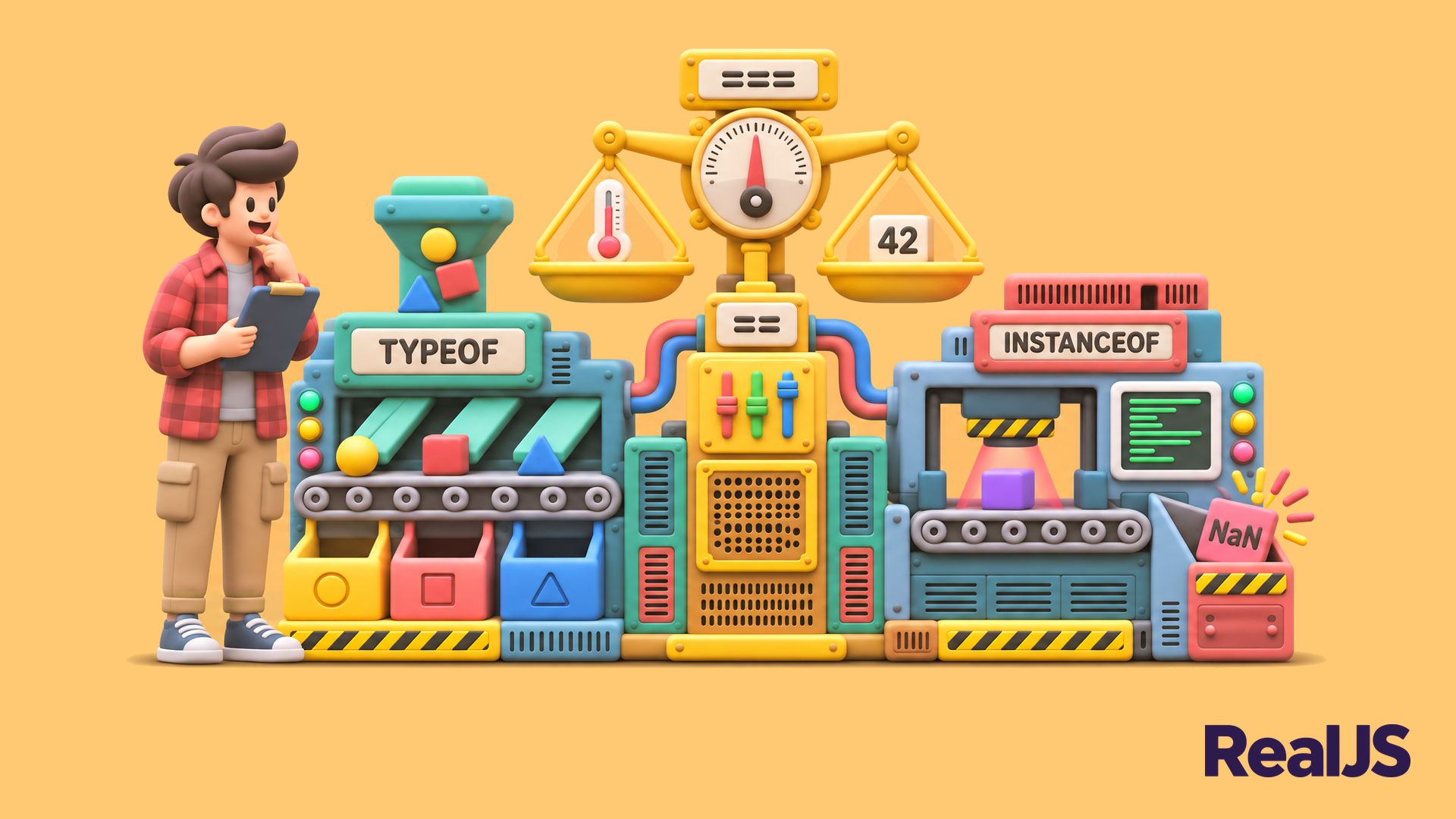
JavaScript Equality and Type Checks for Pythonistas
Port a weather co-op's readings check from Python to JavaScript, and learn how JavaScript compares records, checks types and classes, and follows the rules of == and Object.is().
Work Precisely With Numbers
With types in place, you’ll work with JavaScript numbers, then handle precision, large integers with BigInt, and number formatting the way you would in Python.

Course
JavaScript Numbers for Pythonistas (Fast Track)
Port a coffee roastery's batch planner from Python to JavaScript in this faster version for experienced Python programmers, covering division, rounding, text input, and formatting.

Course
JavaScript Number Precision, BigInt, and Formatting for Pythonistas
Port a coffee roastery's month-end invoice script from Python to JavaScript, and learn to keep money and big IDs exact, catch Infinity and NaN, and format numbers like Python.
Handle Text and Regular Expressions
Now you’ll move to text: JavaScript strings first, then regular expressions and text formatting, mapped onto what you already do with Python’s str methods and re module.

Course
JavaScript Strings for Pythonistas (Fast Track)
Port a payments team's branch-name helper to JavaScript in this faster version, and learn where Python's string habits, from slicing to split() and join(), give the wrong text.
Course
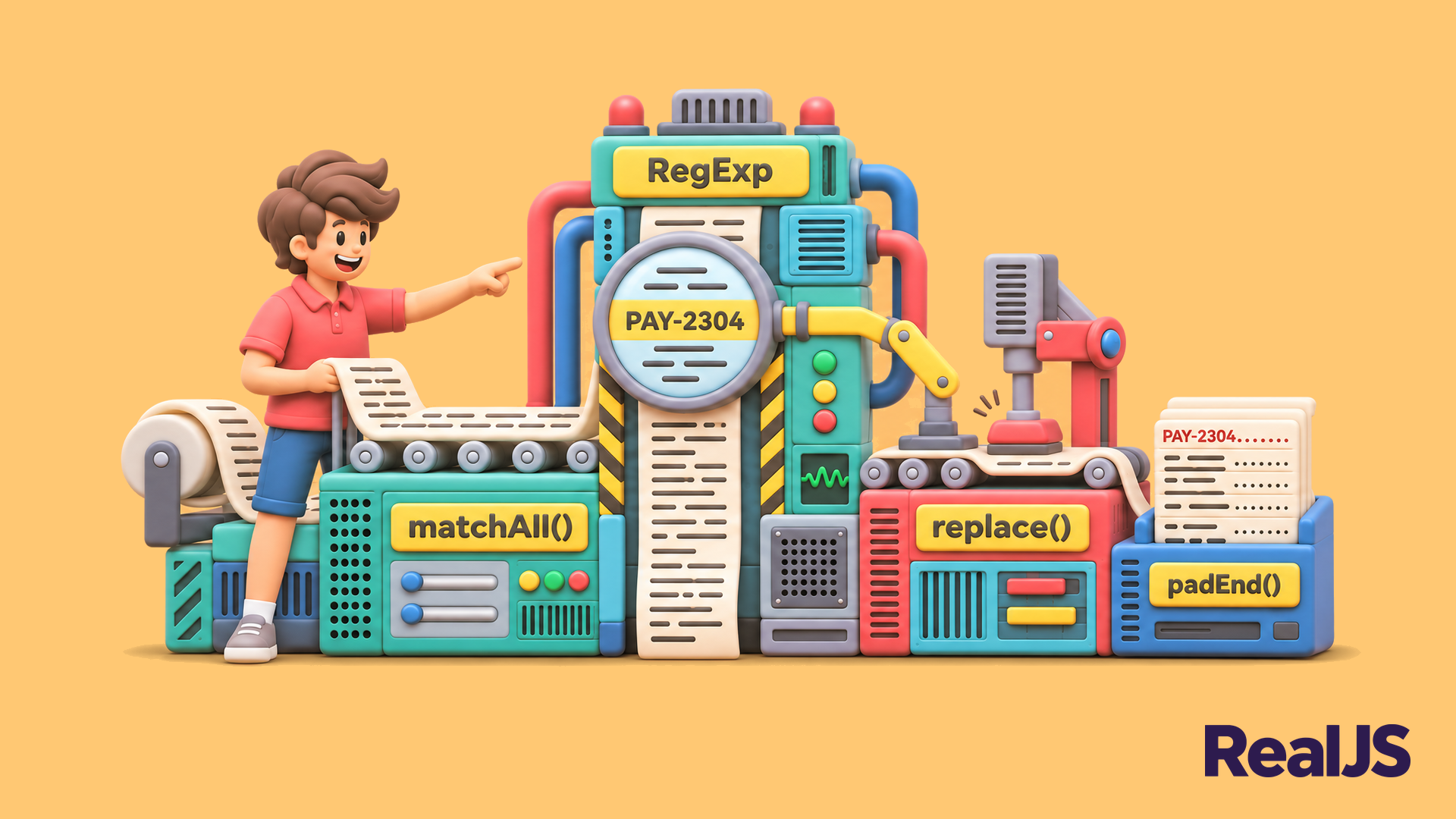
JavaScript Regular Expressions and Text Formatting for Pythonistas
Port a payments team's release-notes script from Python to JavaScript, and learn to line up text in columns and to test, extract, and rewrite text with JavaScript's regular expressions.
Store and Reshape Data
Next come collections. You’ll compare arrays with Python lists and plain objects with dicts, then copy, freeze, and sort arrays without the surprises that catch Python programmers.
Course
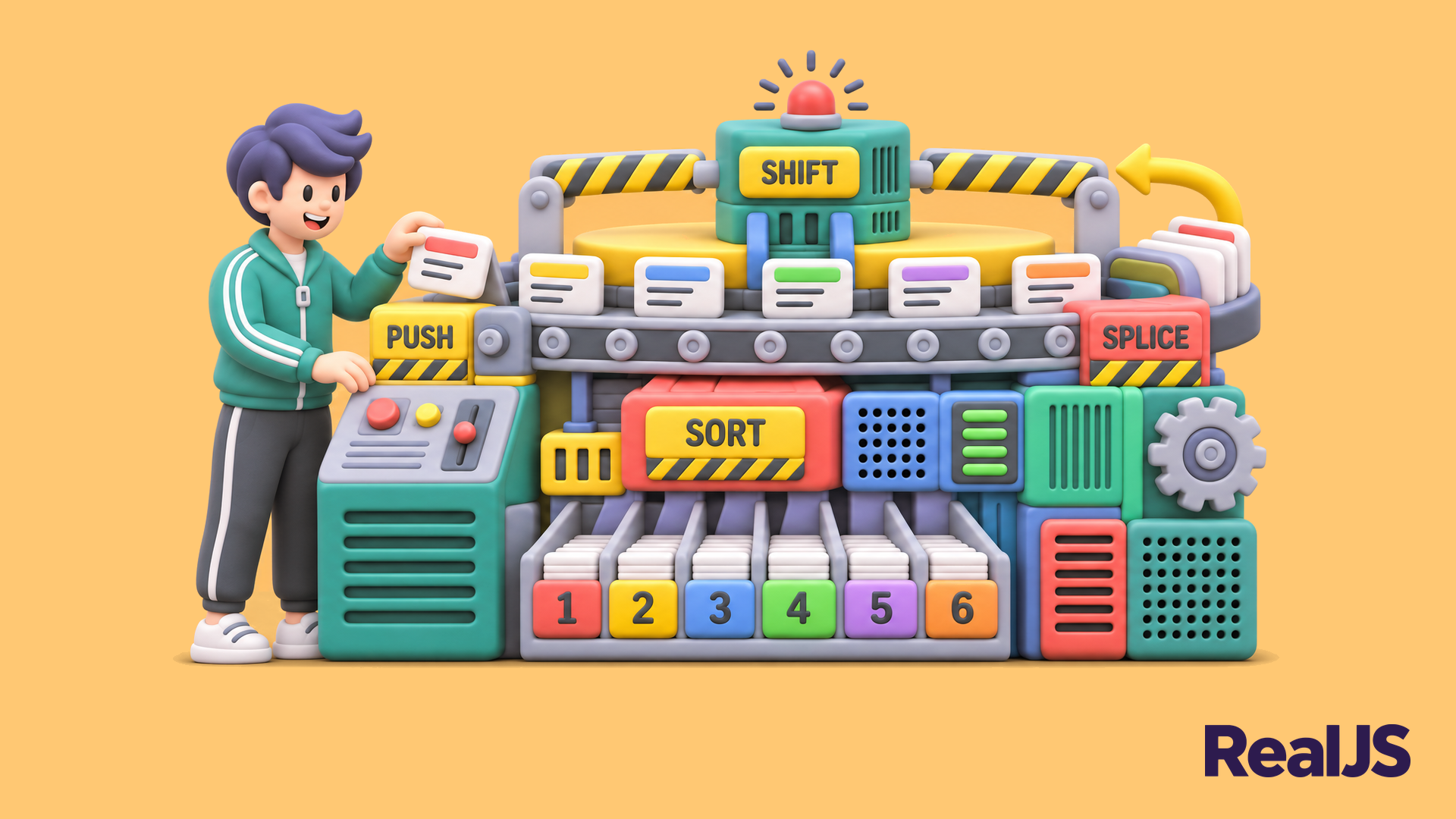
JavaScript Arrays for Pythonistas (Fast Track)
Port a Python pager-rota script to JavaScript while building arrays, adding and removing at the ends, taking copies, editing in place with splice, searching, and sorting numbers.
Course
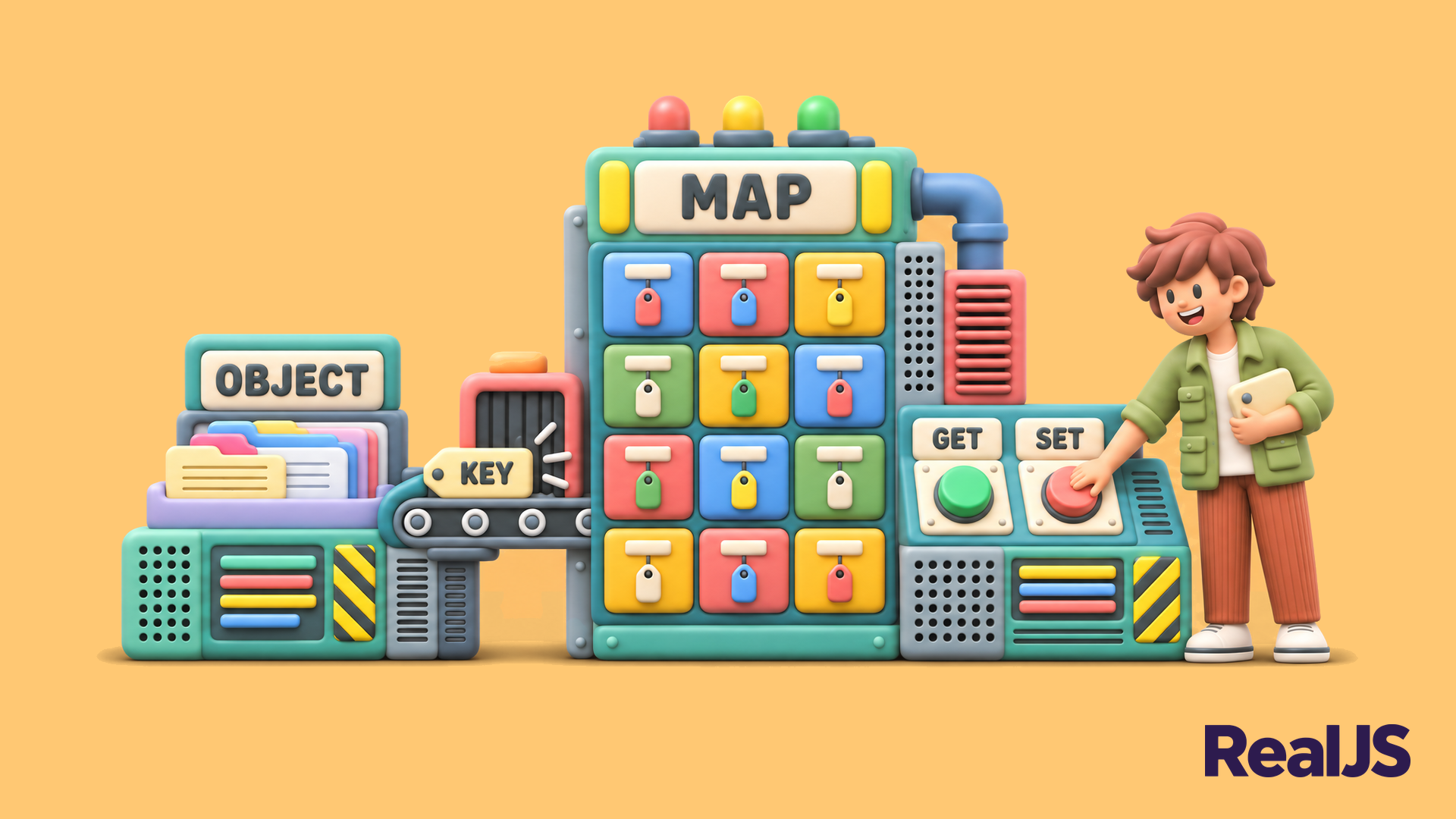
From Dicts to JavaScript Objects for Pythonistas (Fast Track)
Port a Python label script to JavaScript while writing object literals, filling defaults with ??, reaching into nested data with ?., removing duplicates with a Set, and reading and writing JSON.
Course
Copying, Freezing, and Sorting JavaScript Arrays for Pythonistas
Port a five-a-side league's Python table script to JavaScript, and learn how to copy, freeze, and sort arrays and records without changing data you meant to keep.
Use Map, Set, and Smarter Conditionals
Building on objects, you’ll pick the right collection with Map and Set, then write conditions and port Python’s default values and match statements to JavaScript.
Course
JavaScript Map and Set for Pythonistas
Port a community garden's season report to JavaScript, and learn when to use a Map, a Set, or a plain object, and how to count, group, and compare without Counter or defaultdict.

Course
JavaScript Conditionals for Pythonistas (Fast Track)
Port a Python race-day script to JavaScript while writing else if chains, choosing values with the conditional operator, combining conditions with && and ||, checking ranges, and matching values with switch.
Course
Porting Python's Defaults and match Statements to JavaScript
Port a community center's booking confirmations from Python to JavaScript, and learn to choose between || and ??, fill in missing values, port match statements, and call functions safely.
Loop, Write Functions, and Transform Arrays
With your data and decisions in place, you’ll write loops and functions in JavaScript, then replace Python’s comprehensions with array methods.
Course
JavaScript Loops for Pythonistas (Fast Track)
Port a night-bus team's morning report to JavaScript in this faster version for experienced Python programmers, and learn where Python loop habits break, often silently.
Course
JavaScript Functions for Pythonistas (Fast Track)
Port a freelance translator's quote script from Python to JavaScript in this shorter course, and learn how JavaScript functions return results, take defaults and options, and use arrows.
Course
From Comprehensions to JavaScript Array Methods
Port a half marathon's Python results script to JavaScript, and learn the array methods, destructuring, and spread syntax that replace comprehensions and star unpacking.
Work With Scope and Split Code Into Modules
Next, you’ll look closely at how JavaScript scopes names, use closures and functional patterns, and split your code into modules and scripts.
Course
JavaScript Scope, Closures, and Functional Patterns for Pythonistas
Port a bouldering gym's front-desk script to JavaScript, and learn where names live and when they exist, how closures keep state, and how to work with rest parameters, callbacks, and timers.

Course
JavaScript Modules and Scripts for Pythonistas (Fast Track)
The shorter version for experienced Pythonistas: port a Python boiler log digest to JavaScript, and learn modules, script arguments, exit codes, and reading and writing files.
Model Data With Classes and Handle Errors
Now you’ll read and debug JavaScript errors, model your data with classes the way you would in Python, and handle errors in depth with your own error types.

Course
JavaScript Errors and Debugging for Pythonistas (Fast Track)
Port a food bank's donation import to JavaScript in this faster version, and learn to catch, throw, and tell apart errors, and check for the bad data JavaScript doesn't throw on.
Course
JavaScript Classes for Pythonistas
Port a swimming pool's booking module from Python to JavaScript, and learn constructors, fields, private state, static members, subclasses, and methods that keep their this.
Course
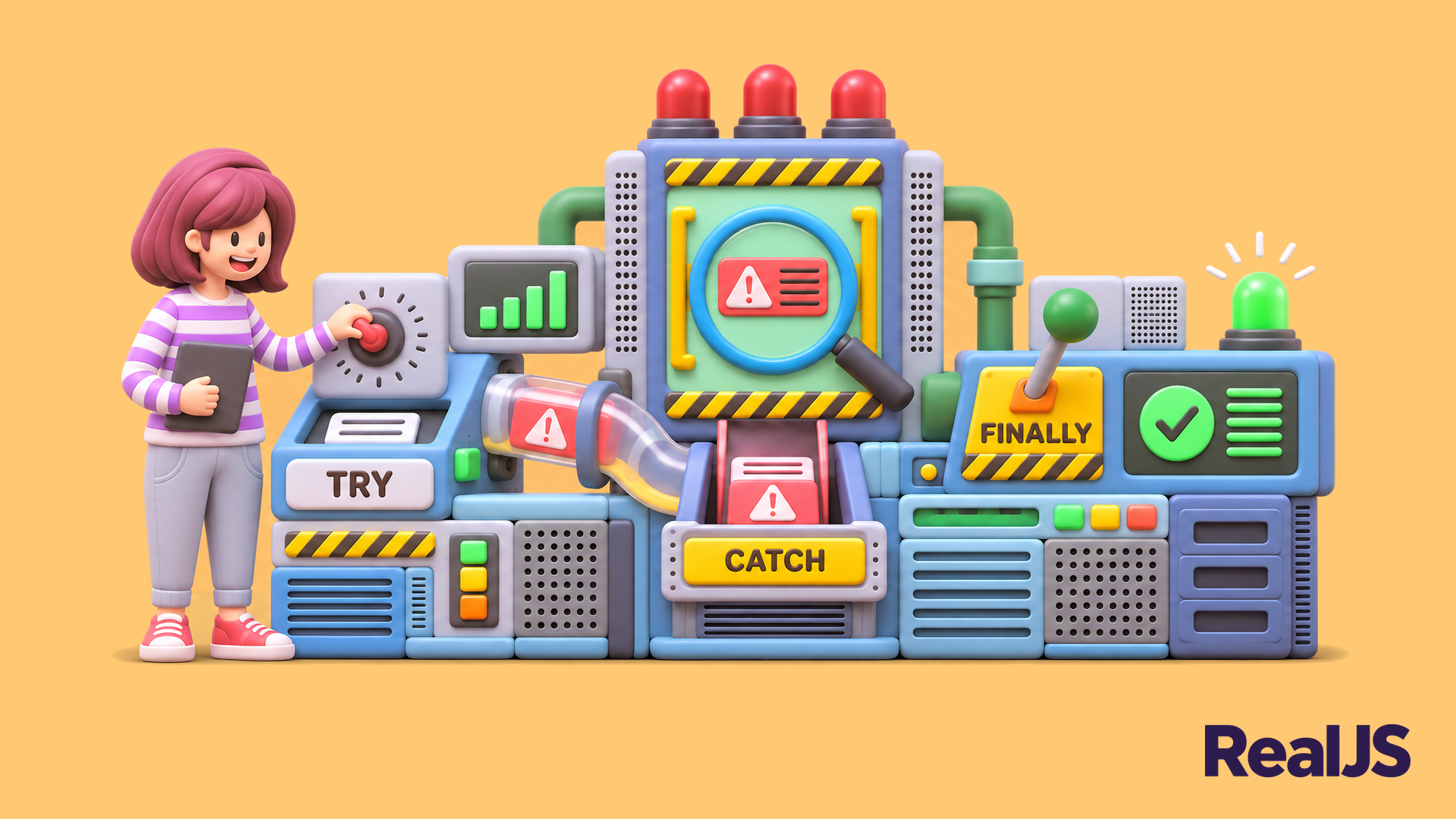
JavaScript Error Handling in Depth for Pythonistas
Port a food bank's all-or-nothing donation import from Python to JavaScript, and learn to define error classes, chain errors with cause, report many errors at once, and use a debugger.
Test Your Code and Work With Dates
With larger programs in place, you’ll test them the way you’d use pytest in Python, and work with dates, times, and time zones.
Course
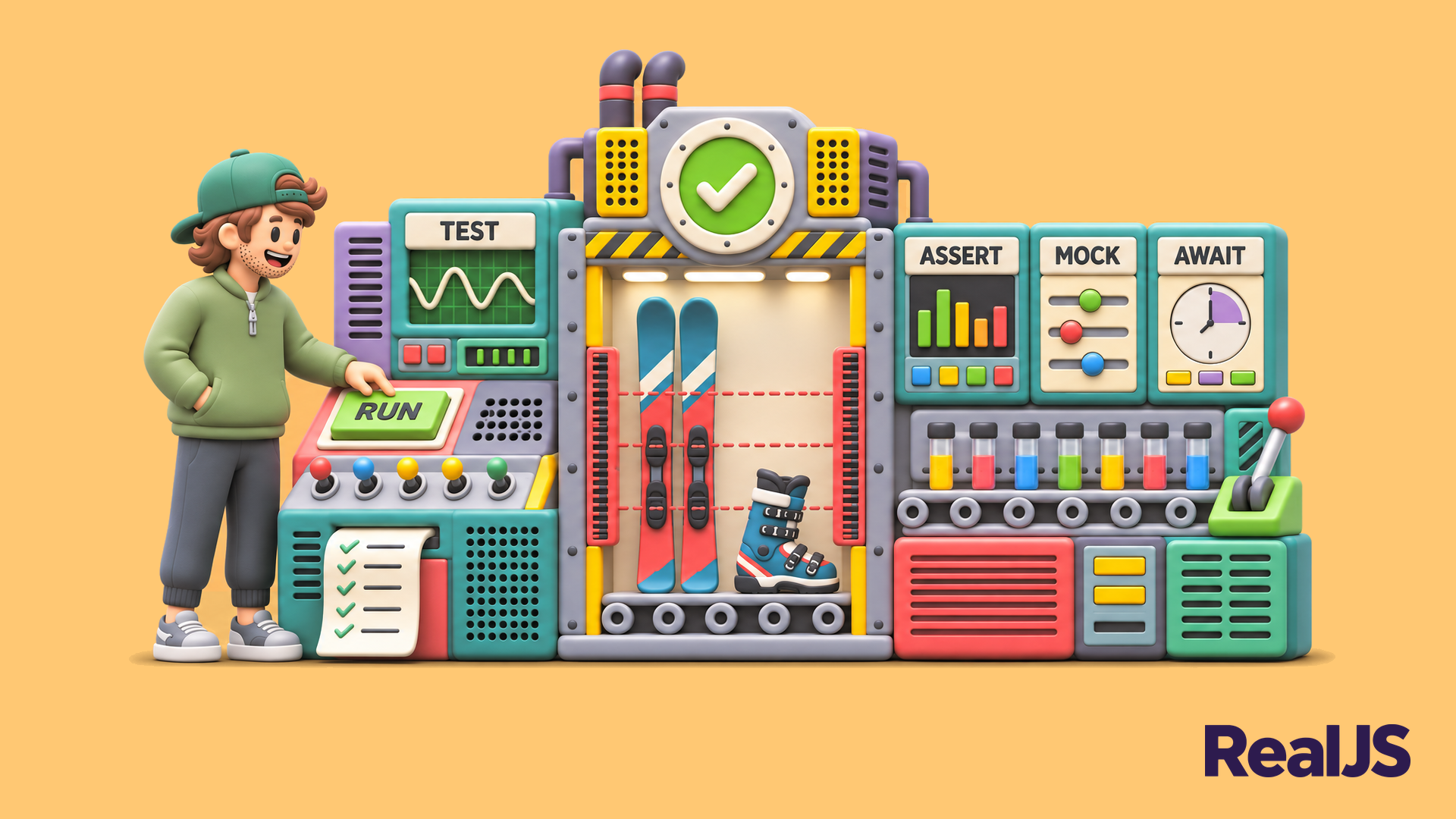
JavaScript Testing for Pythonistas
Port a ski-hire shop's pytest suite to JavaScript, and learn to test with Node's built-in runner: assertions, errors, many cases, shared setup, async code, and mocks.

Course
JavaScript Dates and Times for Pythonistas
Port a physio clinic's Python reminder script to JavaScript, and learn to read older Date code, then use Temporal for time zones, durations, and formatting times for people.
Write Asynchronous Programs and Structure Projects
Finally, you’ll write asynchronous code with promises and async functions, organize projects with ES modules and CommonJS, and clean up resources the way Python’s with statement does.
Course
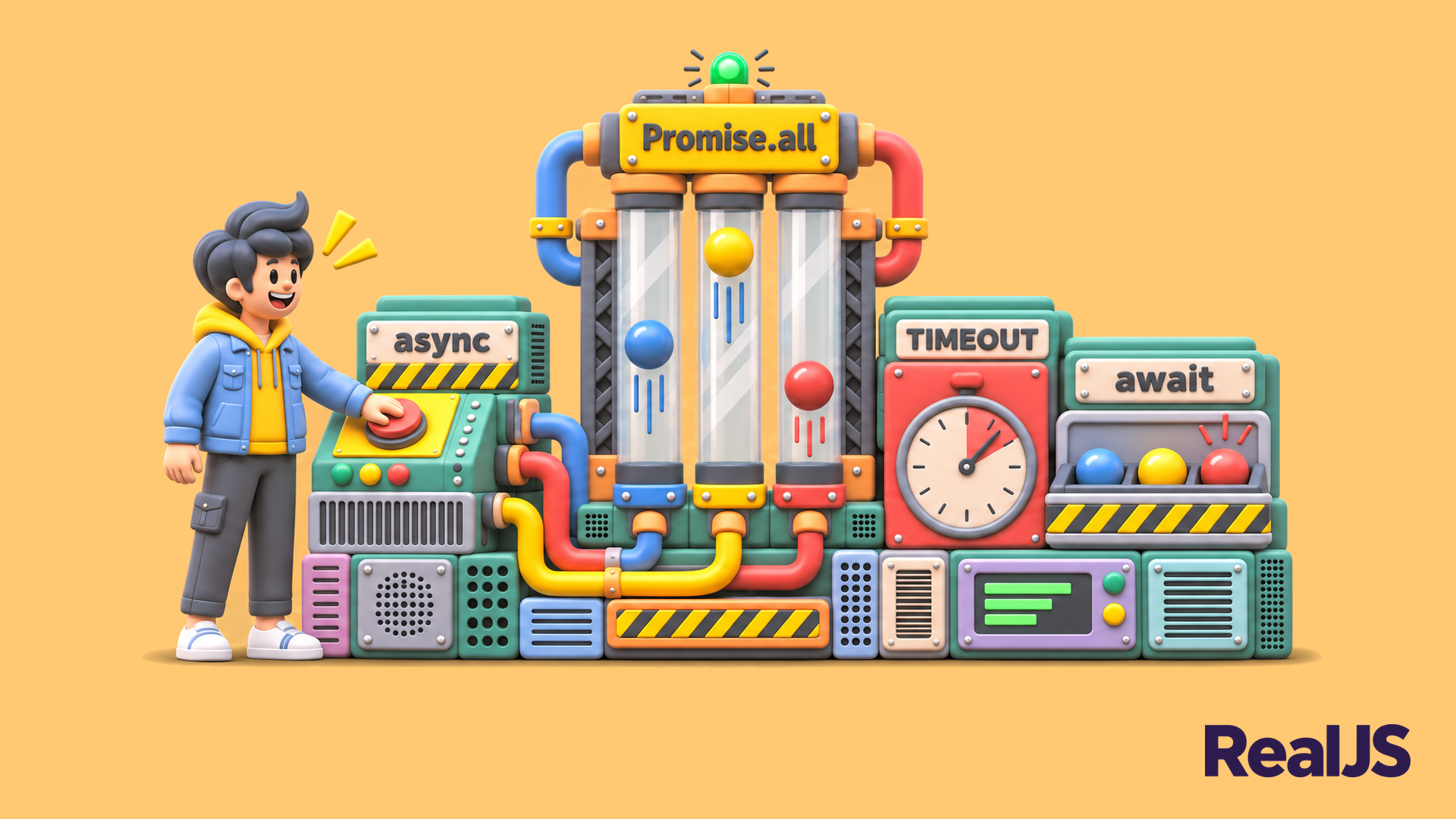
Async JavaScript for Pythonistas
Port a library's asyncio holds check to JavaScript, and learn async functions without asyncio.run(), the promises behind await, Promise.all(), timeouts, and retries.
Course
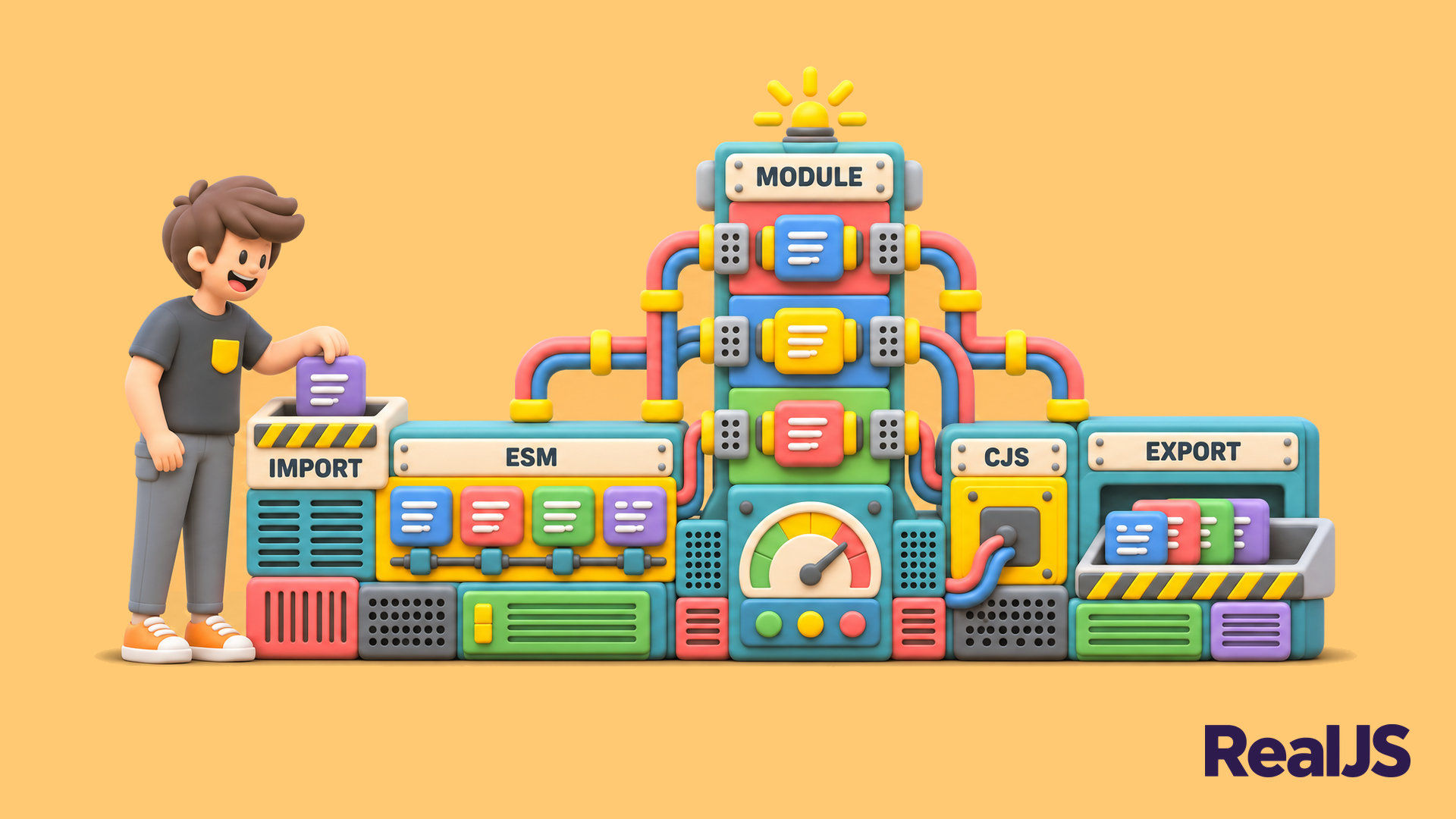
From Python Packages to JavaScript Modules: ESM and CommonJS
Organize larger JavaScript programs with ES modules, shared state, dynamic imports, and CommonJS while porting a Python heating digest.
Course
From Python's with to JavaScript's using and try/finally
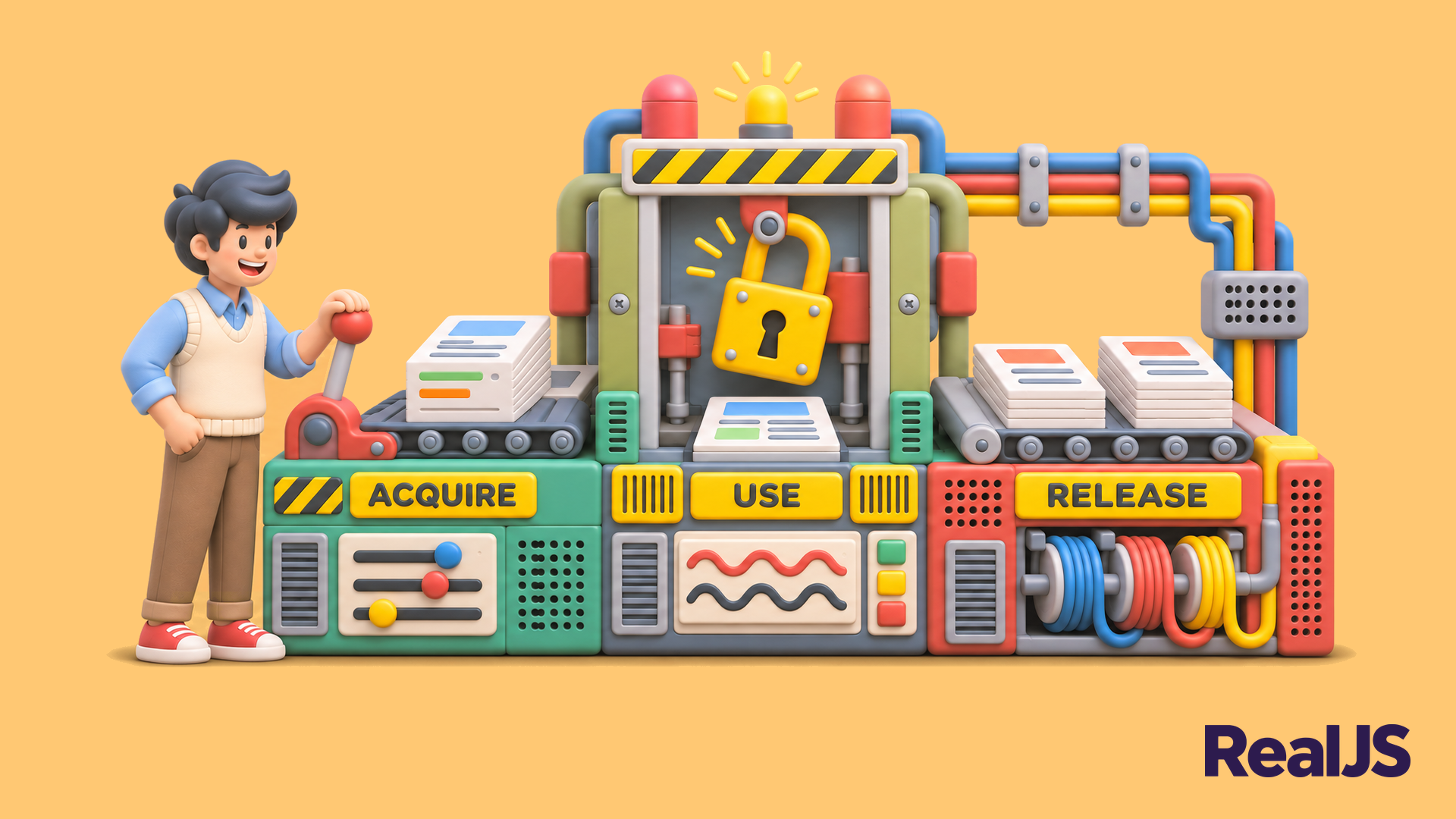
Port a print shop's job runner from Python to JavaScript, and learn to clean up locks, files, and connections with try/finally, using, await using, and disposable stacks.
Test Your Knowledge
You’ve made it through the whole path! In the wrap-up quiz below, you’ll revisit equality and type checks, numbers and text, collections, scope and closures, classes and errors, testing, and asynchronous code. Use it to spot any topics that still feel rusty.
Interactive Quiz
JavaScript for Intermediate Pythonistas
Check what you've learned about JavaScript as an intermediate Pythonista, from equality and numbers to classes, tests, and async code.
Congratulations on completing this learning path! You can now write JavaScript programs that use the right types and collections, organize code into modules and classes, handle errors, test your work, and run asynchronous tasks, applying what you know from Python at every step.
You might also be interested in these related learning paths:
Got feedback on this learning path?
Looking for real-time conversation? Visit the RealJS Community Chat or join the next “Office Hours” Live Q&A Session. Happy coding!
