JavaScript News
Stay up to date with the JavaScript world. Here, the RealJS team covers the developments that matter to working developers: new language features as they move through the standards process, major releases of Node.js and other runtimes, and important changes to popular frameworks, libraries, and tools.
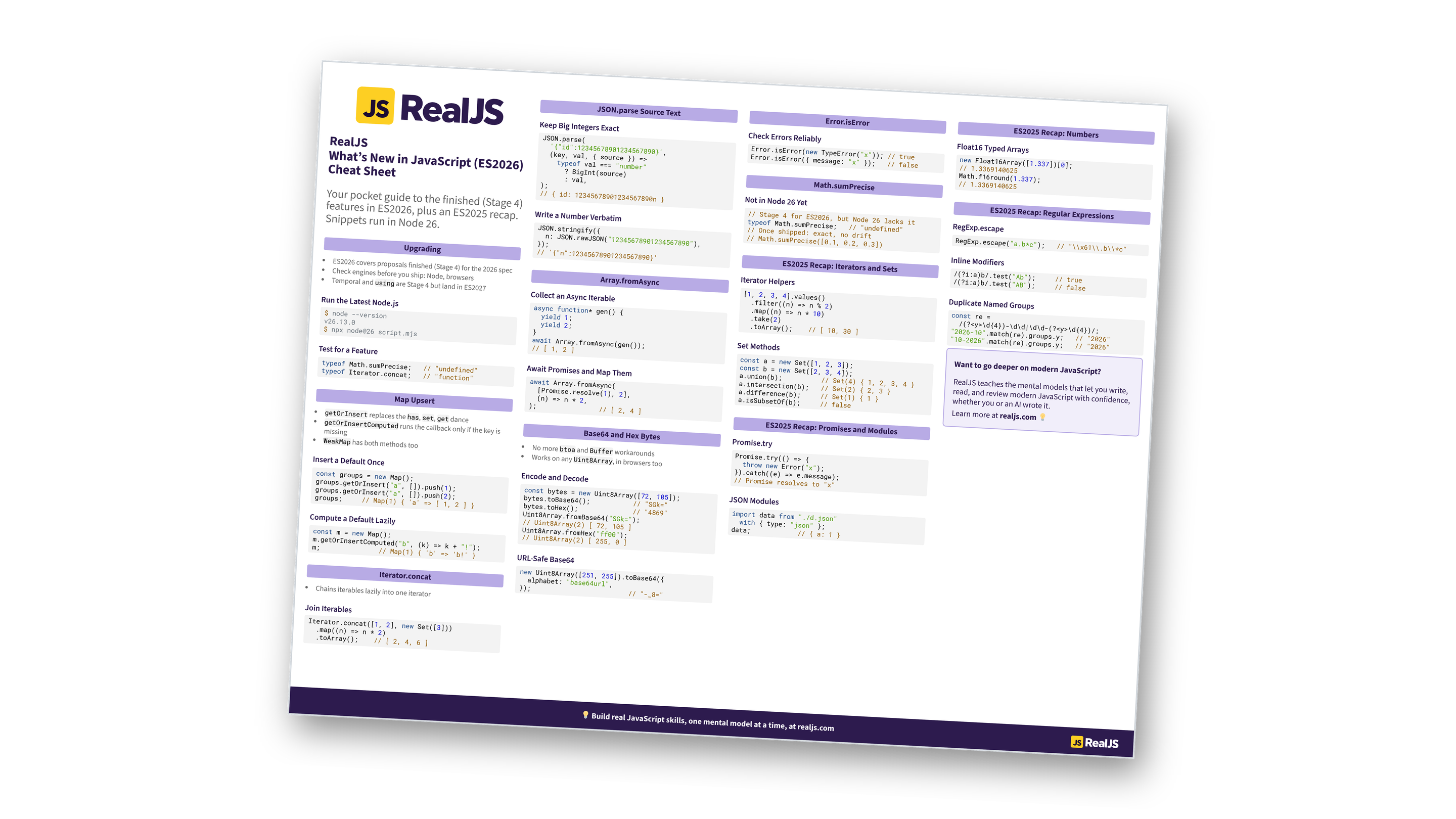
Free Bonus: Download the What’s New in JavaScript (ES2026) Cheat Sheet PDF and keep the essentials at hand.
Instead of chasing every headline, each article explains what changed, why it matters, and what, if anything, you should do about it in your own projects. You’ll learn which new features are ready to use today, which ones to keep an eye on, and how to upgrade safely when a release affects your code.
JavaScript is standardized as ECMAScript by a committee called TC39. Proposals move through stages from 0 to 4, and features that reach stage 4 are added to the next yearly edition of the standard. Browsers and Node.js often ship features before the edition is final.
ECMAScript is the official specification of the language, and JavaScript is the name everyone uses for implementations of it in browsers and runtimes. Versions like ES2015 or ES2026 refer to yearly editions of the specification.
Check a compatibility table, such as the one on MDN Web Docs, for the browsers and Node.js versions you support. If a feature isn’t available everywhere yet, you can often use a polyfill or a build tool that converts it to older syntax.
Node.js releases a new major version every six months. Even-numbered versions become long-term support (LTS) releases, which receive fixes for about three years and are the best choice for production apps.
Focus on changes that affect the tools you use, and don’t feel you need to adopt every new library. Follow a curated source like this page, and upgrade your projects on a regular schedule rather than all at once.