JavaScript Careers
JavaScript is the one language that runs on both sides of the web, which makes it a common way into a development career. These resources help you plan that path: what frontend, backend, and full-stack developers actually do, what to learn first, and how to prepare for the coding interviews that stand between you and the job.
Free Bonus: JavaScript Cheat Sheet

Variables, arrays, objects, functions, and async basics in one printable reference.
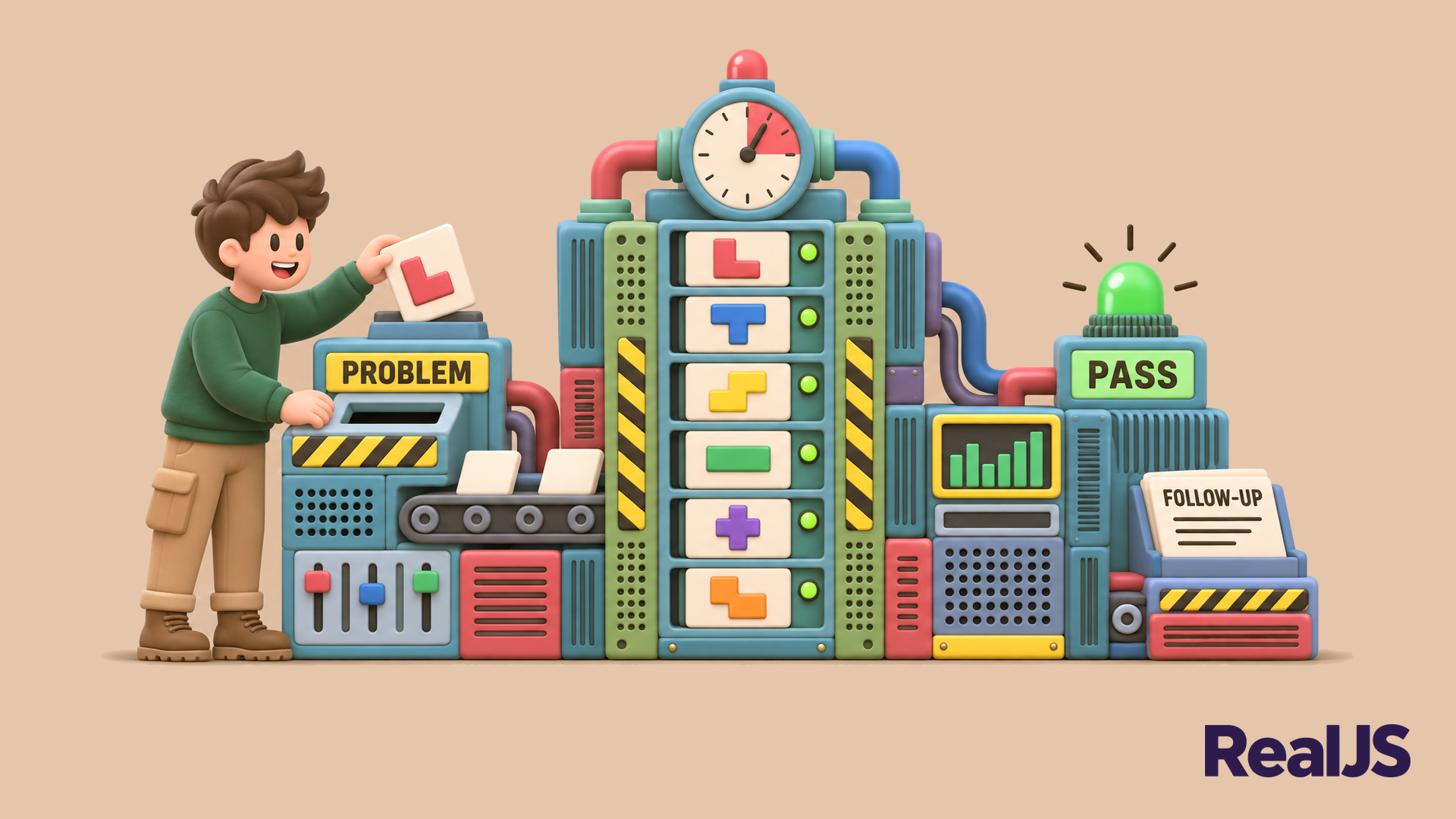
Get the Free Cheat Sheet »AI assistants now write a lot of routine code, so employers care more about judgment: can you read code, explain why it works, and catch the bug before it ships? Start with the JavaScript Coding Interview Practice learning path to train the problem-solving patterns interviews test, and to explain your reasoning out loud.
Yes. JavaScript runs in every browser, powers servers through Node, and is used across frontend, backend, and full-stack roles. You can see results quickly, and the same language carries you from your first script to a production web app.
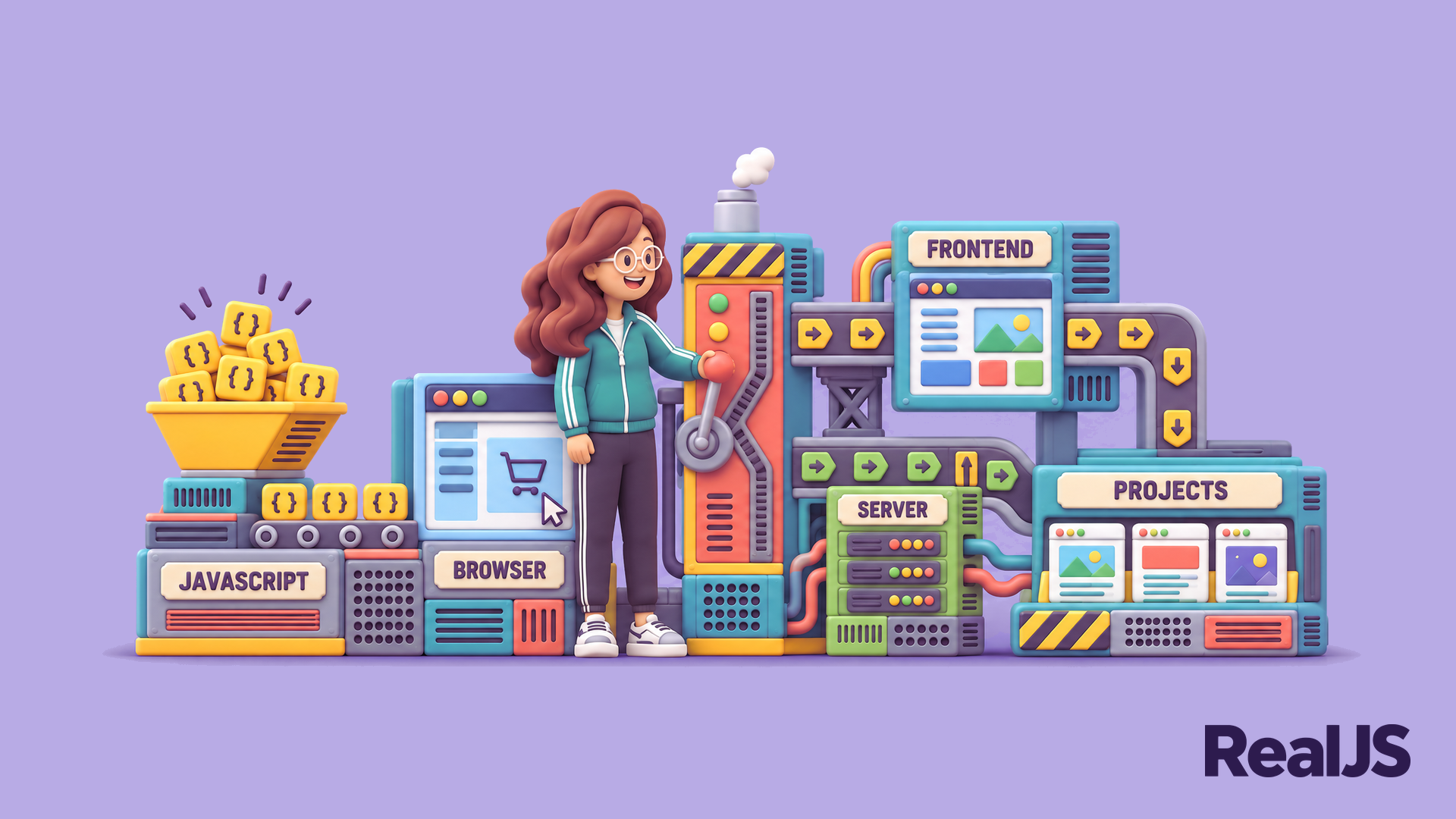
Frontend developers build what runs in the browser: pages, interactions, and user interfaces. Backend developers build the servers, APIs, and databases behind them. Full-stack developers work on both sides, which JavaScript makes easier because one language covers the whole stack.
Practice the common problem patterns, such as hashing, two pointers, sliding windows, trees, graphs, and dynamic programming, until you can recognize which one fits a new problem. Solve problems out loud and explain your trade-offs, because interviewers grade your reasoning as much as your code.
No. Many JavaScript developers are self-taught or come from bootcamps. What matters is that you can show working projects, explain your code, and solve problems in an interview.
Yes. AI tools write code faster, but someone still has to decide what to build, review what the AI produced, and fix it when it’s wrong. Understanding JavaScript is what lets you do that well.