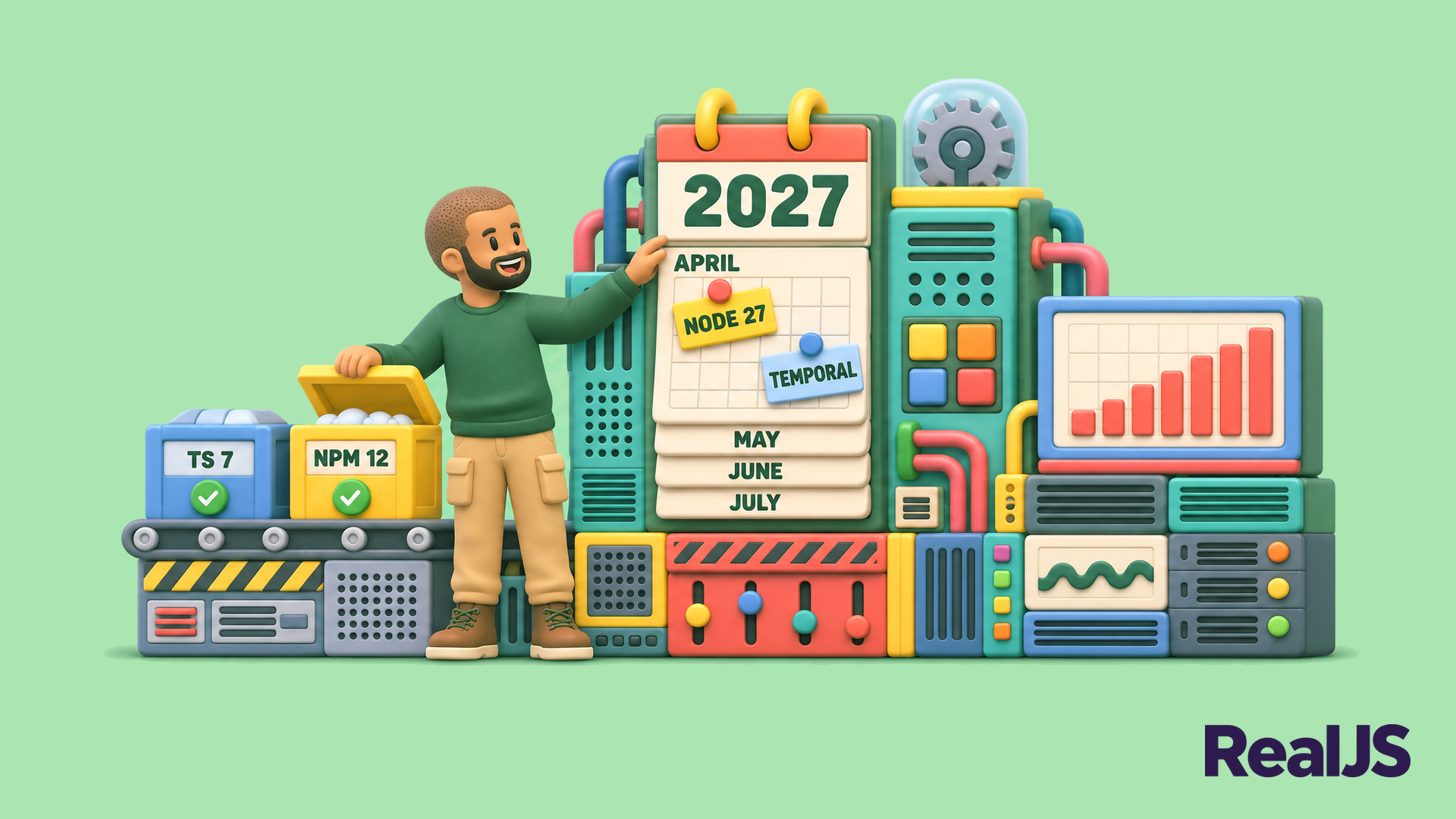
The biggest JavaScript trends for 2027 are already on the calendar or in the data. Node.js 27 ships in April 2027, the first release under its new schedule of one major version a year.
Temporal is slated for ES2027, and TypeScript 7 and npm 12 are already out. In the State of JS 2025 survey, the share of respondents’ code written by AI grew from 20 to 29 percent in a year.
npm 12 and TypeScript 7 change how your project installs and builds the moment you upgrade. Node.js 27 and Temporal need a line in your 2027 plan. The survey numbers are background and don’t ask anything of your code.
Free Bonus: What's New in JavaScript (ES2026) Cheat Sheet
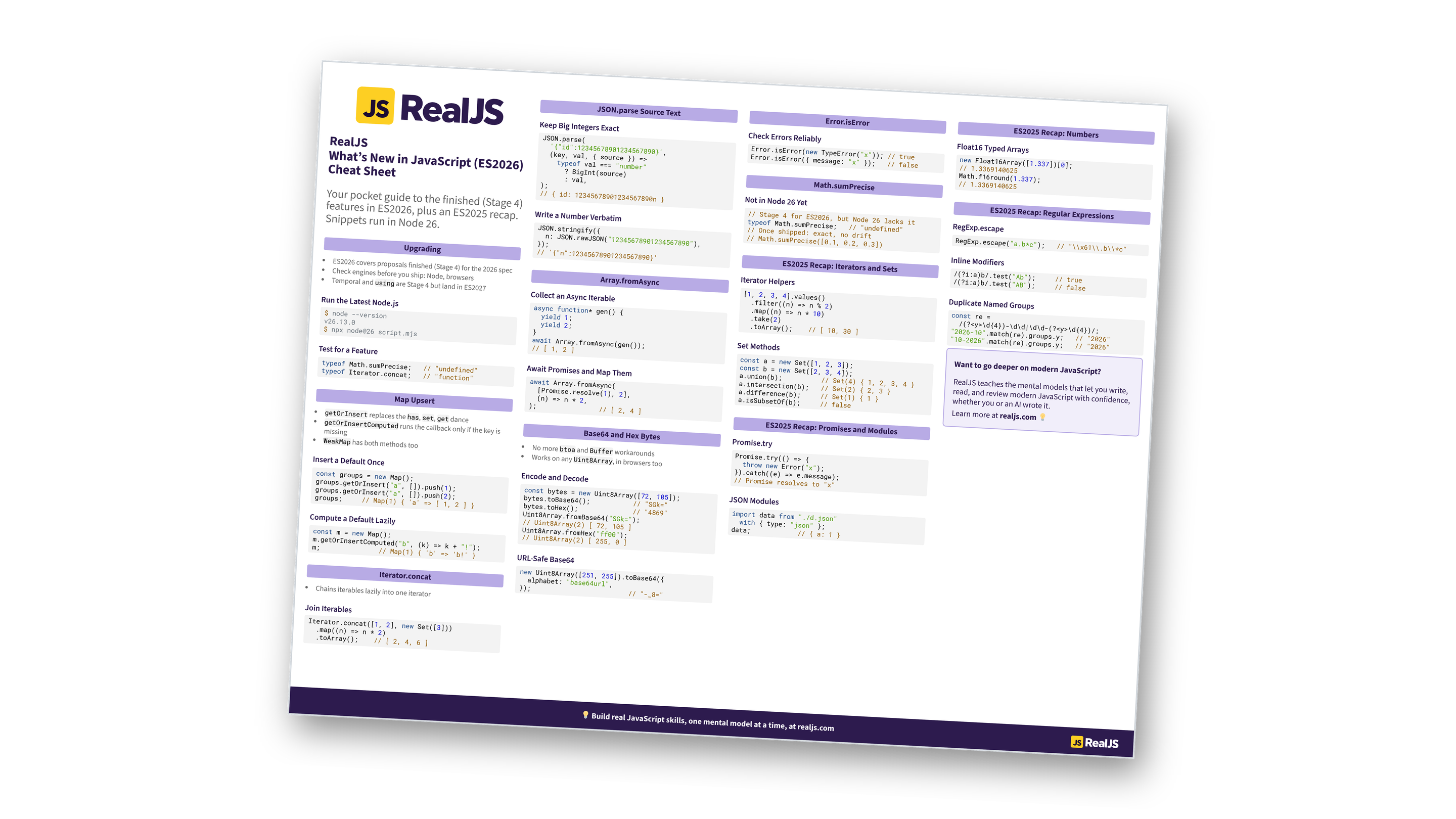
What's new in JavaScript ES2026, with the features you can use today, in one printable reference.
Get the Free Cheat Sheet »How These Trends Were Selected
A trend made the cut only when a primary source backed it with a date or data. That source can be a published release schedule, a TC39 decision, a release you can install, or published data, such as State of JS 2025 and GitHub’s Octoverse 2026 report. Forecasts didn’t qualify because you can’t plan an upgrade around one that nobody can check until 2027 is over.
JavaScript Trends Already on the 2027 Calendar
Node.js and the language itself already have dates you can put in a calendar, one in a release schedule and one in a TC39 decision. Both dates come from the groups responsible for Node.js and JavaScript, and neither forces you to move before your project is ready.
Node.js Moves to One Major Release a Year
Starting with version 27, Node.js ships one major release a year, in April. Each one spends six months as the Current release before it becomes a long-term support (LTS) release in October. The version number matches the year, so 27.0.0 arrives in 2027. Until now, only the even-numbered lines got LTS, and the odd-numbered ones expired after a few months.
The Node.js project laid out the change in its post Evolving the Node.js Release Schedule, revised on March 10, 2026. Its schedule makes Node.js 27 the Current release on April 22, 2027, and an LTS release on October 20, 2027. Each LTS line gets 30 months of support, so Node.js 27 is covered into 2030. An alpha channel runs from October to March for anyone who wants to test early.
The post also carries a warning in plain words:
“This schedule is not final and may be amended”
For your plans, that means one Node.js upgrade a year, with no rush to make the first one. Node.js 26 is the last line under the old model. It became LTS on October 28, 2026, and it’s supported until April 30, 2029. Node.js 27 stays a Current release until October 2027, so the fall of 2027 is the natural time to move production apps.
If you deploy to Deno or Cloudflare, Cloudflare and Deno: What Shuts Down and What Keeps Running covers the changes on that side.