Intermediate JavaScript
Learning Path ⋅ Skills: Higher-Order Functions, Array Methods, References and Copying, Nested Data, Closures, Call Stack, Modules and JSON, Error Handling, Debugging, Classes
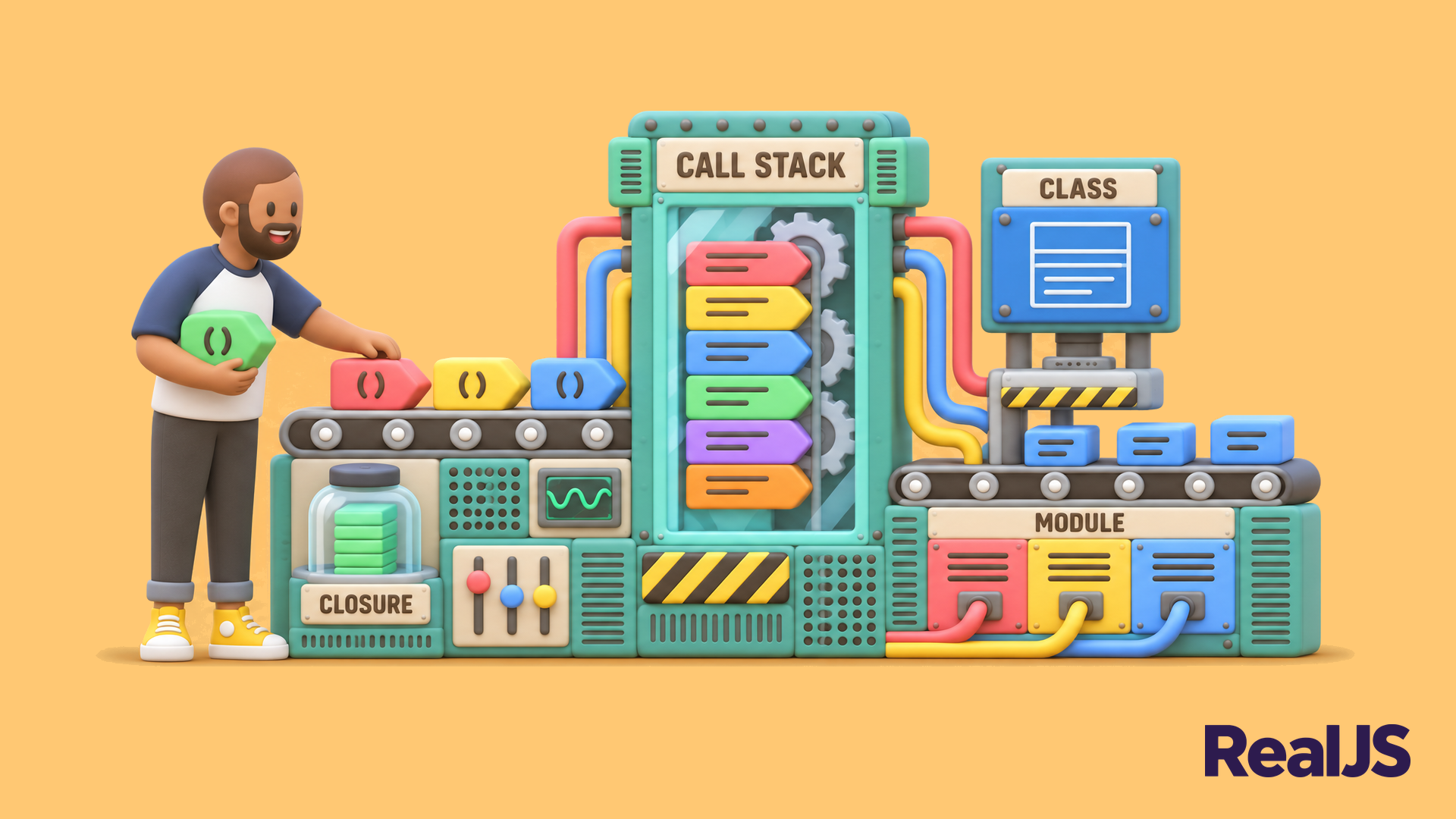
This learning path is for you if you’ve finished JavaScript Basics, or can already write small programs with functions, loops, arrays, and objects, and want to take on projects with more moving parts. You’ll write JavaScript in any editor and run it with Node in the terminal.
You’ll see how JavaScript works behind the scenes: functions are values you pass around, objects are shared by reference, and this is decided by the call. You’ll hand functions to array methods, copy data safely, summarize nested data, and build functions that remember state. Then you’ll split programs into modules that save JSON, handle errors at the right level, and design classes, built from parts where inheritance doesn’t fit.
Each course tells one story and stands on its own. Exercises in the browser check your code with automated tests, and each course ends with a project you build on your own computer and a quiz. In the last course, you build a project from a brief without a walkthrough, then plan a program of your own.
Intermediate JavaScript
Learning Path ⋅ 9 Resources
Is this path right for you? Mentor AI knows what’s in it and can help you decide where to begin.
Ask Mentor AI

Hand Functions to Array Methods
Start with the idea behind much of this path: in JavaScript, a function is a value you can store, pass, and hand to another function. You’ll give parameters defaults, then transform, filter, search, and sort a list of records with array methods, and build a movie-night picker in Node.

Course
Functions You Can Pass Around
Learn to treat JavaScript functions as values: store them, pass them, and give parameters defaults. Then transform, filter, search, and sort a list of records by handing functions to array methods, and build a movie-night picker in Node.
Share, Copy, and Reshape Data
Now that you pass functions to array methods, you’ll look at the data they work on. You’ll predict when two names point at one object, make copies that leave the original untouched, and compare records by identity and by contents. Then you’ll read data with lists inside records and summarize it with reduce(), Map, and Set, without crashing on the parts that are missing.
Course
References: Two Names, One Object
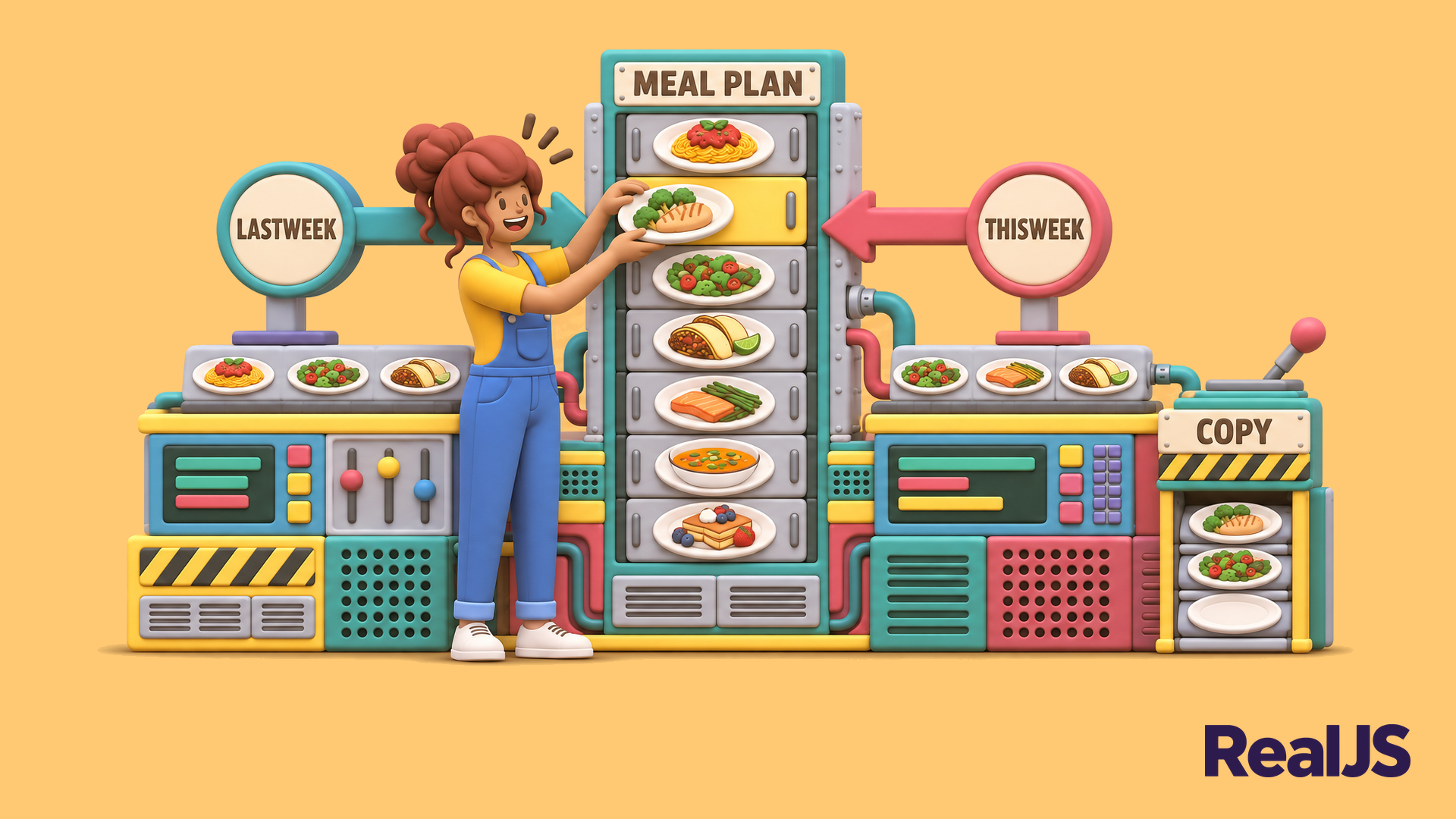
Learn why a quick copy can change the original in JavaScript. Trace two names to one object, make shallow copies, compare by identity and contents, and build a meal planner in Node that leaves last week untouched.

Course
Working With Nested Data
Learn to work with lists inside records in JavaScript. Loop through every level, count with reduce, group records, collect with Map and Set, handle missing parts, and build the Riverside Book Club's year-end report from its reading log.
Follow Calls, Scope, and Closures
With your data under control, you’ll see what happens when your functions run. You’ll follow nested and recursive calls on the call stack, look up names in the scope where they’re written, and build functions that remember state between calls. Then you’ll compose small functions into pipelines for a quiz-night scorekeeping kit.

Course
Scope, Closures and the Call Stack
Learn how the call stack, scope and closures work in JavaScript. Follow nested and recursive calls, build functions that remember state with factories, once() and memoize(), compose small functions into pipelines, and build Marco's quiz-night scorekeeping kit.
Organize Programs and Handle Failures
Your programs are growing, so you’ll give them structure. You’ll split a program into modules with one job each, keep its data in a JSON file, and make deep copies. Then you’ll read stack traces, throw errors with useful messages, catch them at the right level, and track down a wrong result with a method instead of guessing.
Course
Modules and JSON: Programs Across Files
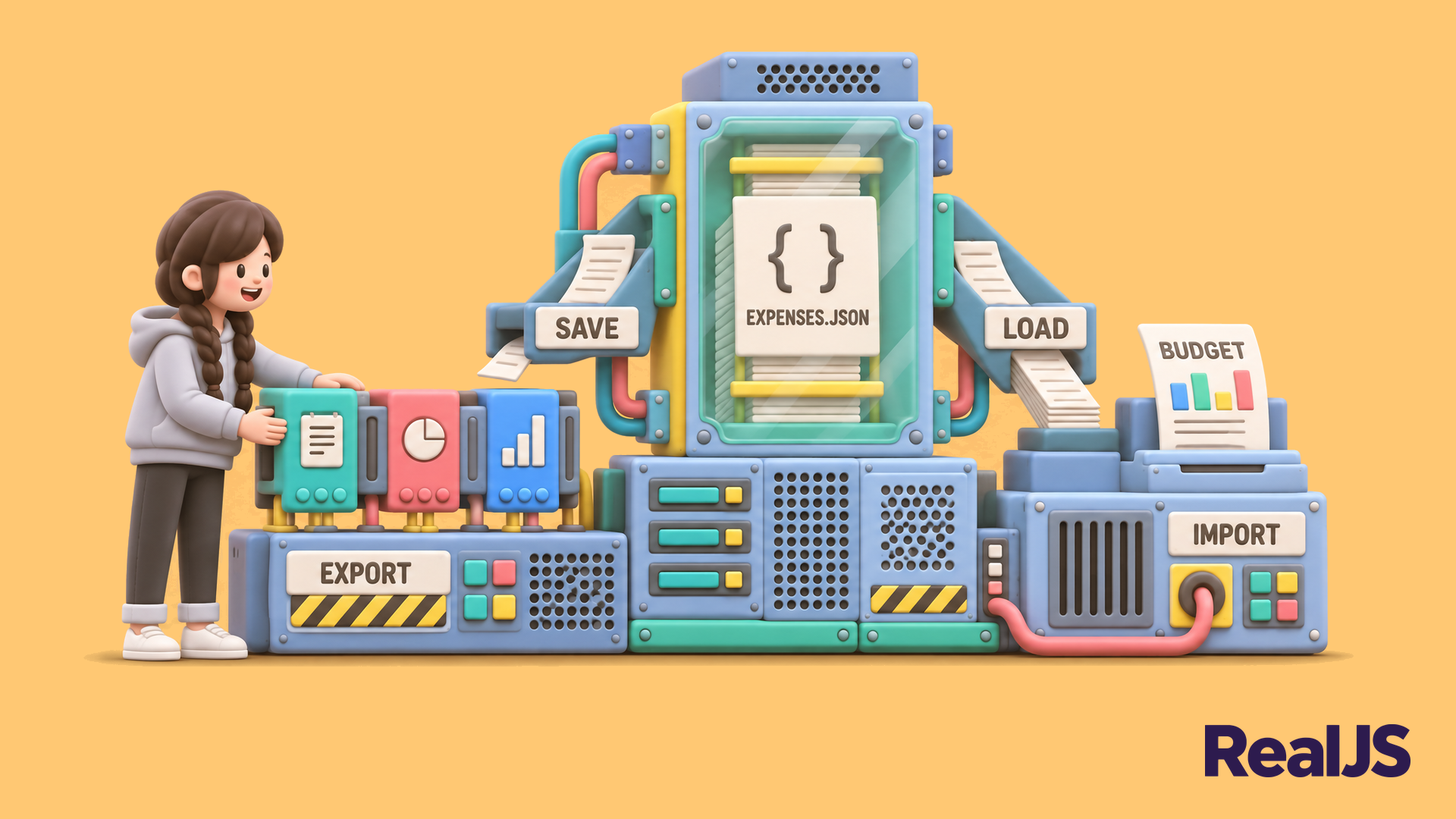
Learn how to keep a Node program's data in a JSON file, split the program into modules with one job each, and make deep copies. Build Dana's home budget tracker, a program in several files that saves her expenses and tries a what-if budget.
Course
When Things Go Wrong: Errors and Debugging
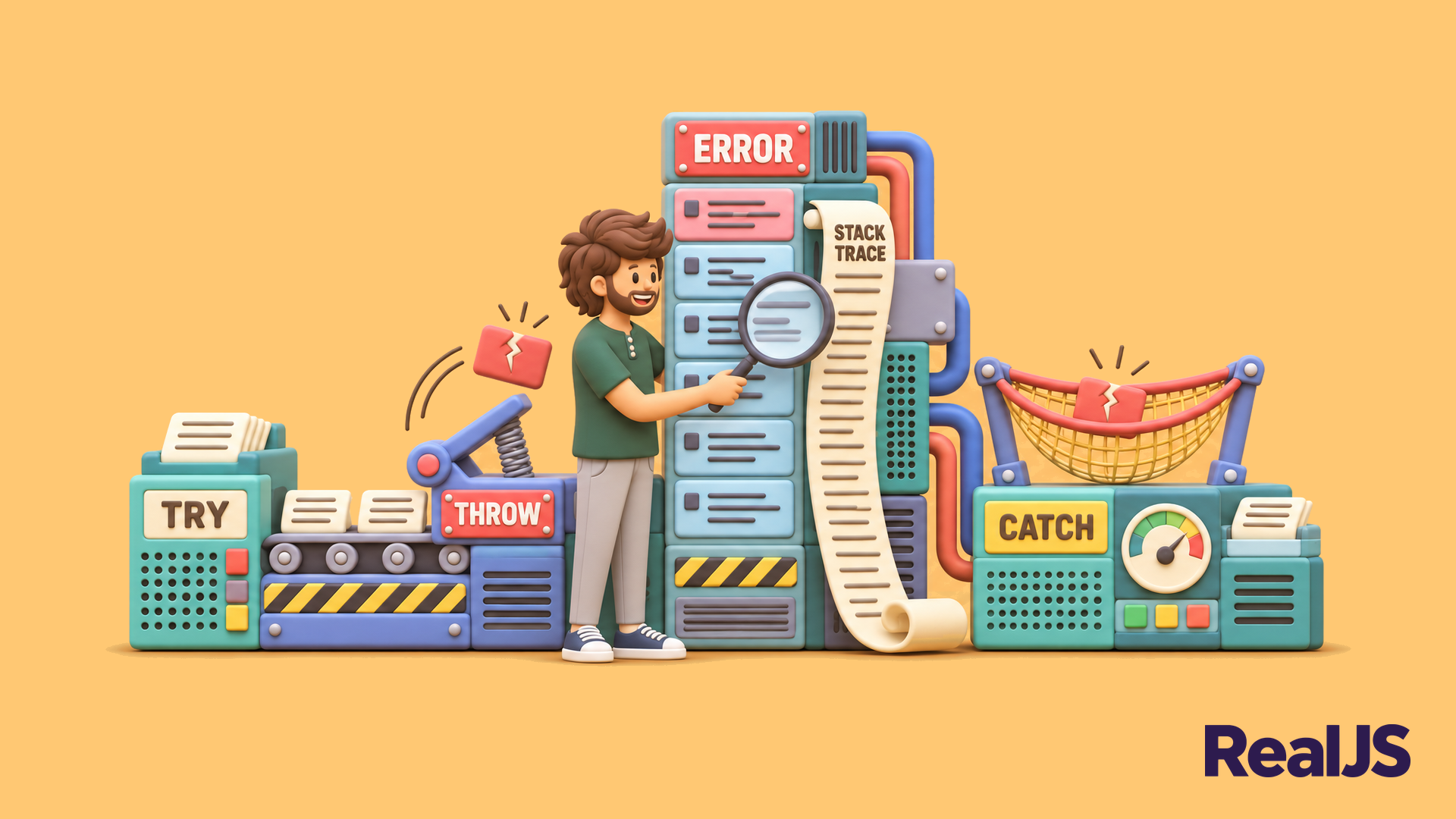
Learn to read a stack trace, throw and catch errors at the right level, and debug wrong results. Build a running club's season log.
Model Things With Classes
Finally, you’ll bring data and behavior together. You’ll predict what this refers to in any call, build classes that protect their data with private fields, getters, and setters, and follow the prototype chain behind them. In the last course, you’ll design a family of classes, compose behavior where inheritance doesn’t fit, define your own errors, and convert typed values, building a project from a brief without a walkthrough.
Course
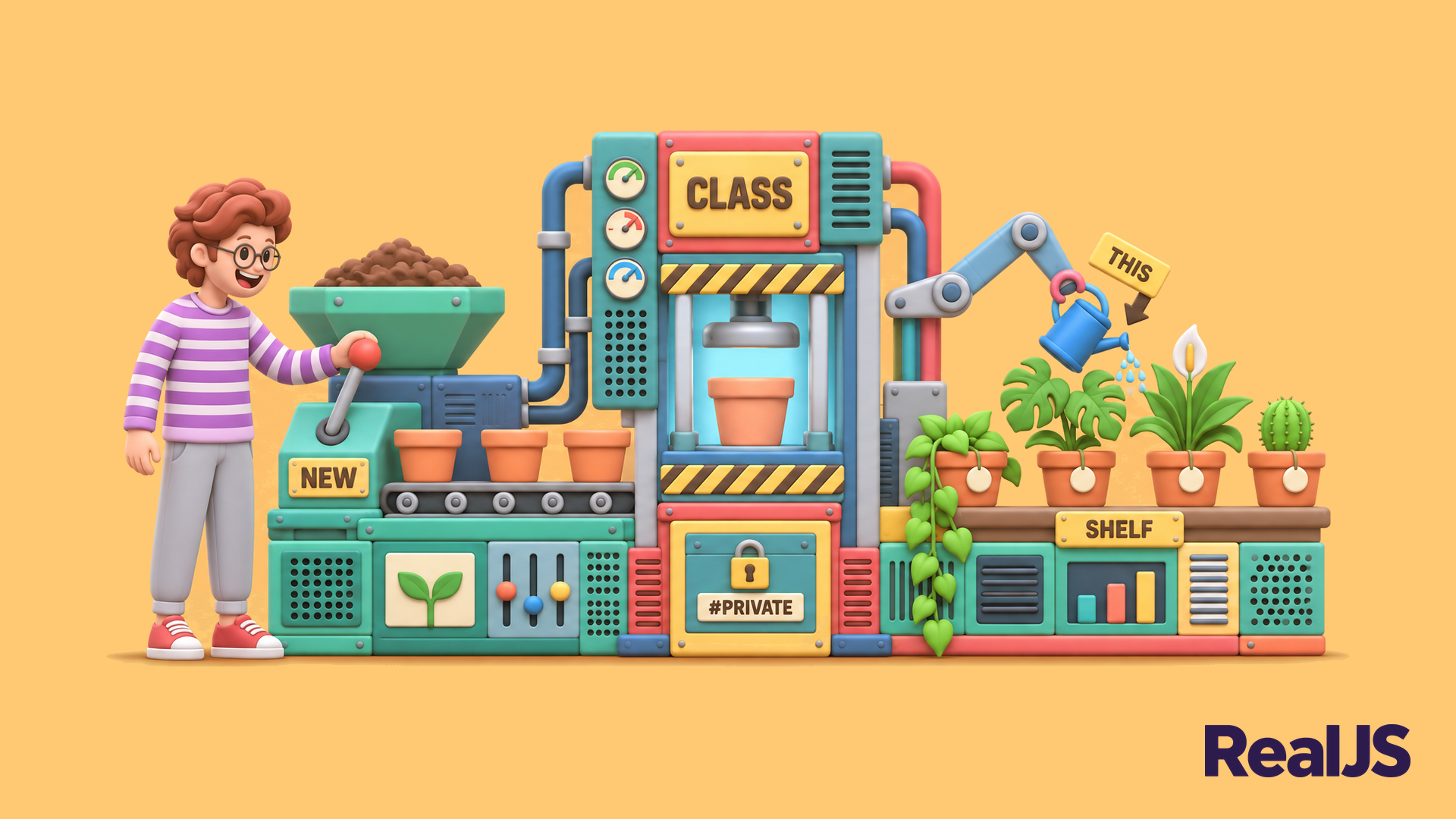
Objects, this and Classes
Learn to give objects methods, predict what this refers to in any call, and build classes that guard their data with private fields, getters, and setters. Build Mei's houseplant tracker.
Course
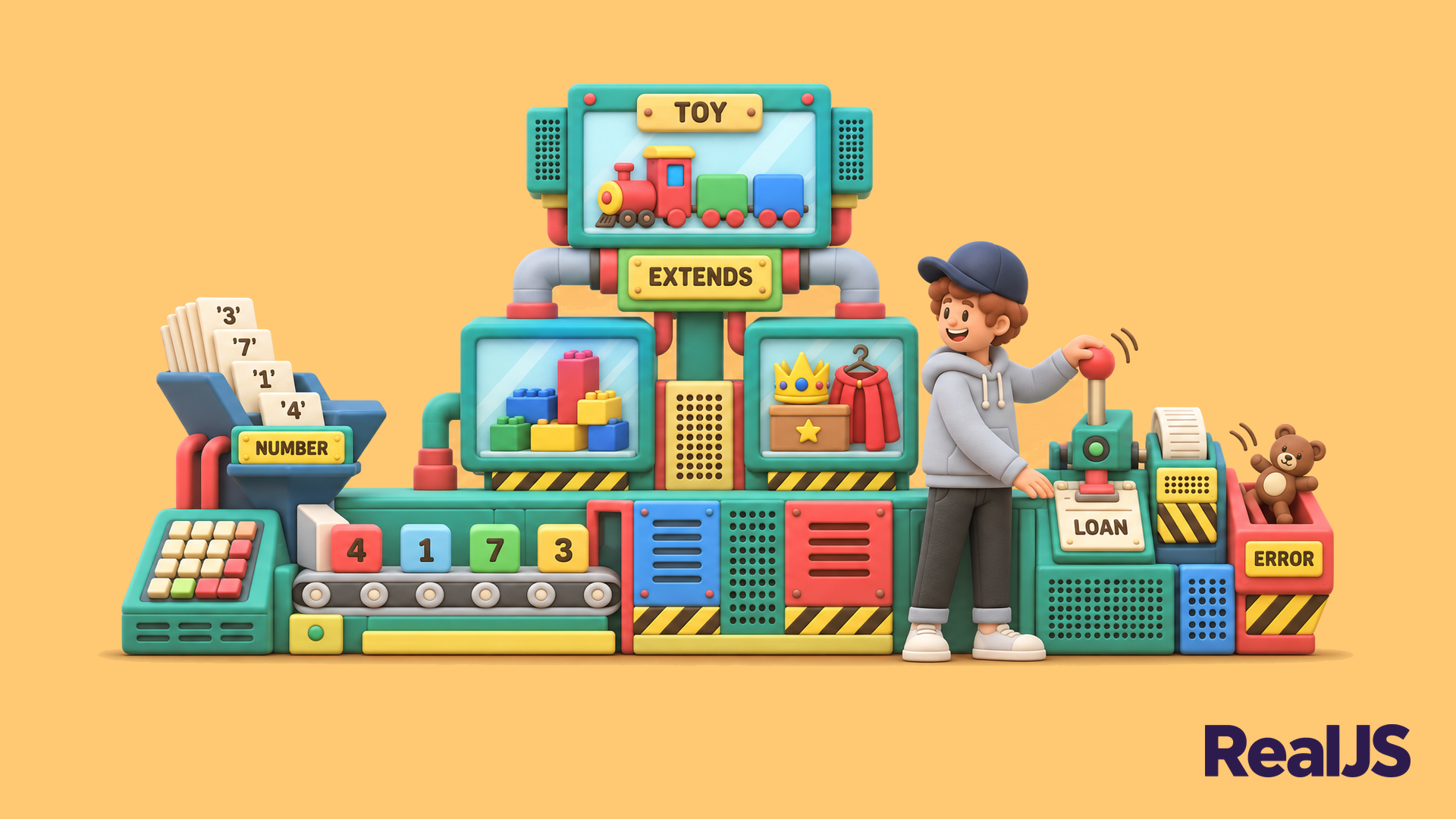
Inheritance, Composition and JavaScript's Types
Learn when one class should extend another and when to build an object from parts, define your own errors, and convert typed values where they arrive. Build the Elm Street toy library's lending tracker.
Test Your Knowledge
You’ve made it through the whole path! In the wrap-up quiz below, you’ll revisit the most important ideas: passing functions to array methods, sharing and copying data, summarizing nested data, closures and the call stack, modules and JSON, handling errors, and designing classes. Use it to spot any topics that still feel shaky.
Interactive Quiz
Intermediate JavaScript
Check what you learned on the Intermediate JavaScript path: callbacks, references, nested data, closures, modules, errors, and classes.
Congratulations on completing this learning path! You can now pass functions to array methods, copy data without changing the original, summarize nested data, and build functions that remember state.
You can also split a program into modules that save their data as JSON, handle errors at the right level, and design classes that guard their data, composing behavior where inheritance doesn’t fit.
You might also be interested in these related learning paths:
Got feedback on this learning path?
Looking for real-time conversation? Visit the RealJS Community Chat or join the next “Office Hours” Live Q&A Session. Happy coding!
